
Michael Perry
Married to Denise Perry, we have four children. I work at SpringHill serving as it's President and CEO. I love my family, reading, cooking, coaching my kids and fishing. I'm also a student of organizations and those who lead them. All of which leaves little time to get into trouble.
Being a SpringHill Camper for the Weekend
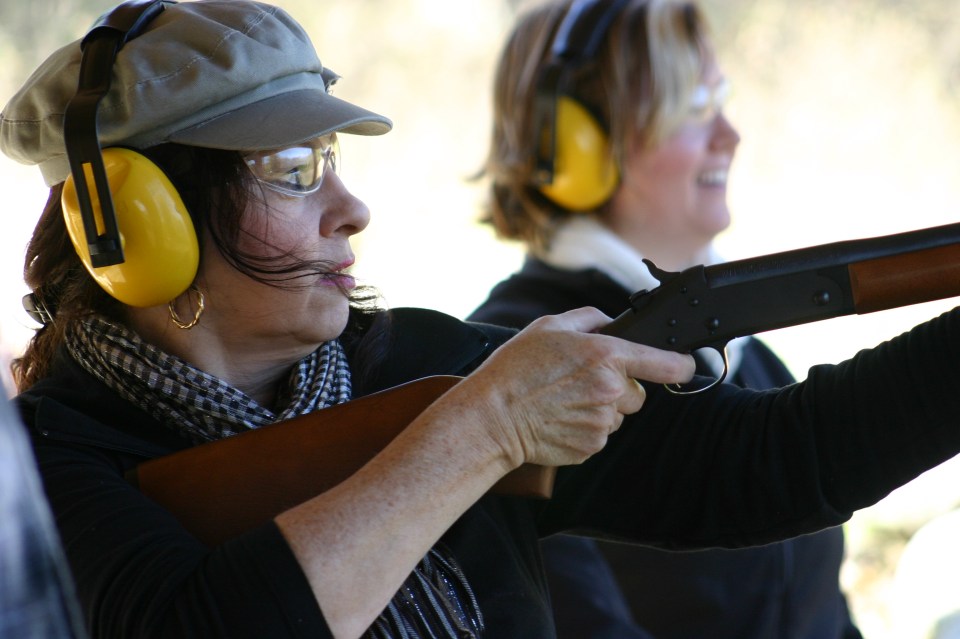
What do you have when you combine over 600 women and a camp designed, built and loaded with activities for kids? You have a SpringHill Women’s Retreat.
We’ve been doing women’s retreats for decades including this weekend and I’m always amazed, amused, honored and humbled that we have this incredible privilege to serve so many women in this way.
I’m always amazed because so many women want, for a weekend, to become campers just like kids. They eat, sleep, and do all the things our youth campers do on a weekend retreat or in a summer camp program.
I’m also always amused, because as good campers, these women participate enthusiastically in every activity SpringHill offers, from our ziplines to riding horses to trap shooting to scaling one of our climbing walls. It’s literally one of our busiest activity weekends of the year.
I’m honor that we can provide these women a SpringHill style worship experience with engaging speakers such as this weekend’s teacher Liz Curtis Higgs.
And most importantly, as with any SpringHill Experience, I’m humbled that the combination of all these elements help 100’s of women know and grow in their relationship with Jesus Christ.
The Rule of “Last”
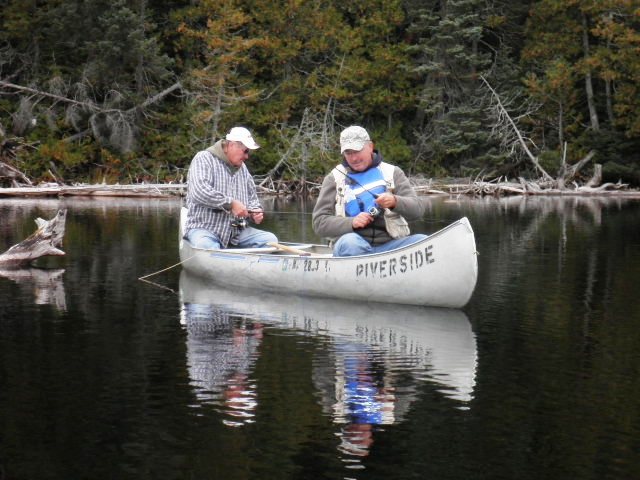
David Lynema (left) and Randy Boike “Just one last fish and we’ve caught our limit.” Randy Boike, David Lynema and I knew we were pushing the edge of getting back to the lodge in day light. If we stayed too much longer we’d be in the dark for part of our 2.5 hour return trip which included crossing 5 lakes, shooting 2 narrow rapids and making 2 long walks through the woods.
But we wanted to catch “just one last fish.”
Maybe not the safest decision when you’re in the northern Ontario bush.
And it’s especially not good when catching that last fish leads to an unplanned swim in a very cold Canadian lake, at the end of a very long day, at the end of September.
But that’s what happened on the last day of the SpringHill fishing trip. I caught the last fish, a big one (and it gets bigger every day). As I was lifting it into the canoe (I was solo) it tipped and I ended up in a very cold lake wearing way to much cotton.
Thanks to the cool heads of Randy and Dave and the inflatable vest Denise has sworn me to wear when I’m fishing in a canoe I ended up rescued, dried and warm before anything serious happened.
The whole thing turned out to be a humorous adventure rather than a disastrous event, for which I’m grateful.
But I couldn’t help recalling the rule my friend John McAuley instituted at his camp, Muskoka Woods, called “the rule of last.”

Whenever his staff hears “just one last time?” or something similar, they’re to make sure that the “last time” doesn’t happen. Why? Because their experience tells them it’s that “last time” when many accidents occur.
And I now know this rule’s universal and should apply to fishermen as well especially when they say “just one last fish”.
Fishing or Golf?

I come from a golfing family so I “played” golf for many years. But I also come from a long line of fishermen, so fishing’s always been a part of my life.
But 15 years ago I came to the conclusion that I didn’t have the time to do both. I needed to make a Solomon like judgment – golf or fishing?
But the truth was it really wasn’t much of a decision once I got over the fear of telling my family and golfing friends I would no longer be part of the club, both literally and figuratively.
Why did fishing win over golf so easily?
For starters I’ve never been very good at golf so I find playing very frustrating. Being with family and friends is always fun, playing golf isn’t.
On the other hand I’m never frustrated when I’m fishing. If the fishing’s bad then it’s the weather, the fish or the lake’s fault, but it’s never my fault. So I’m never frustrated. When I catch fish, whether it was simple luck or my fishing skills, it’s always a bonus.
Fishing provides the same opportunity for fellowship as golf, except you’re in a boat and not a golf cart. But the level of concentration required in fishing’s significantly less. As a result I’ve had some of the best life discussions ever while fishing.
And as I stated in my previous post, I love being outdoors, but I prefer to always be in the “wild” versus the “manicured” outdoors. Fishing provides the opportunity to be in the “wild”.
Finally, related to being in the wild, I love adventure and fishing’s always an adventure, or at least I tend to make it one.
So Solomon’s wisdom proved right, yes golf’s good, but for me, fishing’s better.
Creation’s Calling

When this blog posts I’ll be in one of my favorite spots in the world for a week of fishing with two groups of friends at Camp Anjigami in northern Ontario.
Besides the great friends and the very cool lodge I’m staying at, the opportunity to be out in “God’s creation” reaches my soul in ways I’m never quite able to express nor do other environments seem to do.
To live, even for a few days, in a wilderness setting reminds me of the vastness of our world and the greatness of the God who created it, providing perspective I’m so prone to lose while running hard through my daily life.
When I’m in the wilderness I experience God first hand. The theologians call creation “general revelation” because God’s character’s revealed in it. This explains why the purer and more pristine the wilderness setting the more I sense God directly and why my soul so loves and needs it.
So this week…
when I’m looking at the stars on a clear night that burn so brightly they reflect off the glassy lake creating the illusion that there are two skies…
or I smell the sweetness of the forest filled with freshly fallen leaves and spruce trees…
or listen to the sound of rushing water…
or, as I’ll work so hard to do, hold an incredibly beautiful brook trout in my hand for just a few moments…
I’ll have experienced God in a life transforming way.
And then I’ll be ready to return to the regular life I’m called to, better for having taken time in God’s creation.
Is It Worth Going on Vacation?

Have you ever wondered if it’s really worth taking a vacation? I’m a day away from my annual Canadian fishing trip with some close friends and I’m doing double duty to get everything done. So I hate to admit it, but I’ve asked myself more than once – is it worth it?
Of course my answer’s always “absolutely YES!” I can’t imagine not being with my closest friends doing something I love to do in a place I love to be.
So then I ask a follow-up question – “what do I absolutely need to do to go on vacation so I’m not worrying about what I didn’t get done?” My answer’s the first step in getting ready to leave.
The answer’s also important because I won’t have any cell service or email so there’s no chance to do any leftover work. And I’ll be mad at myself the entire vacation if I’ve planned so poorly that I have to bring work with me.
The next step is to create a prioritized “Before I leave for vacation” to-do list and then work on it the two weeks before I leave. The list includes SpringHill work, family commitments, trip preparations and other obligations.
I then prioritize the list into two categories. The first is “the stuff that absolutely needs to be done before I leave” and the second category’s the ever-growing “stuff I would like to do before I leave”. You know which one I work on first.
The list does a few things for me. It keeps me focused. It provides my assistant Katie and my wife Denise an idea of what balls that might come their way while I’m gone. And finally the list’s essential as a starting point when I’m back.
So yes, vacation’s worth the work, but I couldn’t be ready without my to-do list.
9/11 – I Remember Where I was when…

Historic moments burn deep images into the hearts and minds of a generation that witnesses them. That’s why anyone alive when the Japanese attacked Pearl Harbor or lived through the assassination of President Kennedy remembers exactly where they were when they heard the news.
It’s why a new generation will never forget where they were when harrowing news arrived on September 11, 2001.
I remember where I was when I heard the news of the first plane crashing into the north tower of the World Trade Center. I was sitting at breakfast at a small diner in Midland, MI with a small team of SpringHill staff and volunteers. We were doing our last run through of a presentation for a significant grant we were seeking from a major foundation.
Because I’d been in my role as SpringHill’s President for only 90 days and with this grant on the line I became focused on the task before us. During our discussion one of our teammates received a phone call from his wife saying a plane had just flown into one of the World Trade Center towers.
Frankly, I quickly shrugged it off as a horrible accident and continued leading our team in the preparations for this important presentation.
But then we got the second phone call about the second plane that crashed into the second tower I knew that something significantly more important than our presentation just happened.
In the midst of this unfolding news we made our presentation to the foundation and received one the largest grants in SpringHill’s history.
But truth be told, I will always remember where I was on September 11, 2001, not because of the incredible grant we received, but because of the images of this historic, life altering event, which are now burned into my heart and mind – forever.
The Underappreciated Work of Making Vision a Reality

We’re enamored with strategic thinking and vision casting. Most leaders want to be seen as strategic and visionary thinkers who cruise around at 30,000 feet. We value this skill set so much that we make heroes out of these same leaders.
But I’m convinced that being just a visionary leader isn’t nearly enough. Now don’t get me wrong I’m not minimizing the importance of these skills – creating strategy and vision need to be a part of any leaders work. Too often, though, leaders spend too much energy on vision and strategy and too little energy on tactics and execution.
We often look down on tactical work and the execution of strategy because we misread people like Steve Jobs and credit Apple’s success to his vision and strategic thinking.
But if you’ve read any of the 100’s of recent articles and blogs about Jobs after the announcement of his retirement as CEO you see a different picture. What you find is a leader who spent much of his time in the “trenches” working on the details of new products – in other words doing the tactical work. This is what made Jobs truly visionary. It was his willingness to do the hard, everyday work required to assure that his vision and strategy succeeded.
So as a leader my goal’s to spend only a small percentage of my time on vision while spending most of my time working side by side with our staff, board, supporters and volunteers in the hard work of making our vision reality. Because at the end of my time at SpringHill, if anything’s written about me, I want it to be said, not that I was just a visionary, but that I led an organization that turned its vision into a world transforming reality.
Be Careful What You Say About Yourself

“The whale that spouts first gets harpooned first” was one of the first things I learned in 1984 as I started in the management training program at Steelcase, Inc. A quote attributed to its then CEO and chairman, Bob Pew.
The message was clear – we shouldn’t talk about how good we are as a company. We just needed to demonstrate it through our superior products, service and value. The need to “spout” indicated more serious issues, issues that would eventually lead to being “harpooned”.
Being understated was a strong value of Steelcase’s and it permeated the entire company’s culture. It’s a value that continues to influence my career and as a result influences SpringHill.
It’s so integrated into my own values that I hadn’t thought much about the quote until one day, late in July, I drove by this sports bar in a small town near Marion, Indiana.
The sign on the side of the building read “Best Damn Sportsbar Period”.
As I went by the front of the bar I said to myself “it doesn’t look like the best one – period” and then noticed the “for sale” sign in the window which confirmed my assessment of the place.

The owners surely hadn’t gone through Steelcase’s management training program. Because if they had, they’d had known not to spend money spouting off on signs. But instead they would have invested that money and energy into the service and experience they provided their customers with the result being that they wouldn’t have needed that final sign I saw in the window.
The Weight of Glory

It’s SpringHill’s Labor Day Family Camp weekend at our two overnight camps. There are nearly 300 families and 1500 people enjoying family time, pursuing fun and adventure and worshipping together with great music and inspiring speakers.
Our Michigan camp speaker is Clint Dupin, a Teaching Pastor for Kensington Community Church in Troy, Michigan. His theme for the weekend is the “weight of God’s glory and its significance in our lives”.
As he was speaking on Saturday morning I couldn’t help but think about some of my favorite words from a sermon from one of my favorite authors, C.S. Lewis, titled “The Weight of Glory“.
Since you might not be listening to Clint this weekend I thought you might be blessed and challenged instead by C.S. Lewis’ words.
“The load, or weight, or burden of my neighbors’ glory should be laid on my back, a load so heavy that only humility can carry it, and the backs of the proud will be broken. It is a serious thing to live in a society of possible gods and goddesses, to remember that the dullest and most uninteresting person you can talk to may one day be a creature which, if you saw it now, you would be strongly tempted to worship, or else a horror and a corruption such as you now meet, if at all, only in a nightmare.
All day long we are, in some degree, helping each other to one or other of these destinations. It is in the light of these overwhelming possibilities, it is with the awe and the circumspection proper to them, that we should conduct all our dealings with one another, all friendships, all loves, all play, all politics.
There are no ordinary people.
You have never talked to a mere mortal. Nations, cultures, arts, civilizations – these are mortal, and their life is to ours as the life of a gnat. But it is immortals whom we joke with, work with, marry, snub, and exploit – immortal horrors or everlasting splendours….
Next to the Blessed Sacrament itself, your neighbor is the holiest object presented to your senses.”
Creating Space

I just completed a regularly planned ritual I began after my first year at SpringHill when I experienced the seasonality of both SpringHill’s work and my job. Now before the end of any given 4 month “season” I lay out my calendar for the next season.
I literally create space by blocking off days for planning, administrative work, meeting with staff and supporters and yes – days off, all based on my goals for the season and the year.
I learned in that first year that if I didn’t take a proactive approach to my schedule it would be filled by others. And if my calendar became filled by others that meant there would be very little time left for many of the other things I needed to do for SpringHill, my family, and myself.
Now don’t get me wrong I work hard to make myself available to our staff, board and supporters as I create space by planning my calendar.
Being available and approachable is a high value of mine.
But without a thoughtful plan I actually become less available and can seem more unapproachable because of the frantic pace I end up running.
So after that first year I learned this fundamental truth – only I can be responsible for my time, my days, and my calendar.
I can’t entrust it to others.
And it’s not fair to do so, because they’re not in a position to manage my time. They’re only in a position to use it.
Only I’m in a position to manage my time, and create the space needed to do the things that only I can do for SpringHill, for my family, and for myself.
To read more on related topics see my posts:


