Making Customers Feel Like Old Friends

You know it when you’ve interacted with a business or organization that has a serious focus on their customers and constituents. You feel as if you’ve interacted with someone who knows and understands you, your needs and wants. It’s almost like you’re an old friend. These are the organizations that you come back to over and over, and recommend to your family and friends.
These organizations have what we call at SpringHill a “Customer Focus”. And being customer focused isn’t just good for business; we believe its, plain and simple, the right way to treat people. Thus being “Customer Focused” is a critical quality all SpringHill staff must possess.
But we need to remember organizations are only customer focused if their employees and staff are customer focused, because it’s people who serve customers, design, build and deliver products and services, not organizations.
Now most of us know what “Customer Focus” looks like from the receiving end, but what does it look like from the giving end? What does a “Customer Focus” person do, how do they think, how is it expressed in their day-to-day work?
They dedicate themselves to exceeding customers’ expectations, which requires getting to know customers well enough to understand their expectations, needs, and wants. Then it’s using this knowledge to, not just meet expectations, but to do everything possible to exceed them, to surprise the customer, to make them feel like an old friend.
Finally, it’s important we understand who the customer is. It’s not just those who pay for our services but anyone who depends on us within or outside our organization. In other words, we all have customers. Our goal then should be to exceed the expectations of all our customers, not just the “paying ones”. And when we embrace that we all have customers and thus all need to have “Customer Focus” we’re creating the kind of organization that will make an enduring impact on the lives of others.
This is part 9 of 14 in a series of posts about what it takes to be successful at SpringHill.
Leading Others in the Most Important Things

If you’ve ever had someone invest in your life by helping you grow spiritually, assisting you in navigating the treacherous places where the eternal intersects with the temporal then you know the absolute necessity of having these kinds of people apart of your life.
As I look back on my life I’ve had a number of people who’ve invested in me spiritually, people with names like Neil, Wayne, Mark, Jack, Terry, and Steve. They’re all people who’ve cared for me and wanted to see me grow in the most important ways.
So as one who received such investment, I’m motivated to do the same for others. It’s one of the reasons I’ve chosen to work for an organization like SpringHill, because SpringHill creates experiences that facilitate this kind of investment by adults in the lives of children. It’s also why one of the personal qualities and professional competencies a person needs to possess to make an enduring impact on the lives of others through their work at SpringHill is what we call “Spiritual Leadership.”
“Spiritual Leadership” is the ability to mentor others, to help them grow in their relationship with Jesus Christ, and ultimately guide them to a life that honors God and expands His Kingdom. Spiritual leadership takes on many forms and can be expressed in many ways, from the ability to lead small groups, to one on one counseling, or teaching before large audiences. Even though the context of “Spiritual Leadership” may differ, the outcome is the same, helping others better live out their faith in Christ.
This is why SpringHill needs people who demonstrate “Spiritual Leadership”, because it’s through spiritual leadership that our mission’s fulfilled and young lives transformed for eternity.
This is part 8 of 14 in a series of posts about what it takes to be successful at SpringHill.
Being a People Centered Person
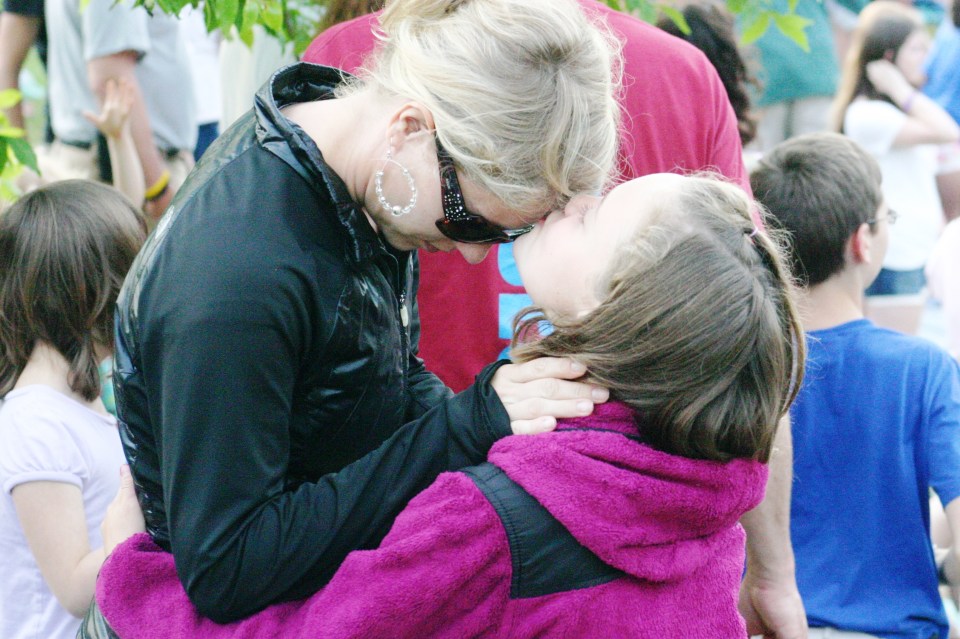
A significant part of being a contributing member of a community dedicated to achieving something great and enduring is being able to see the world through the eyes of others. It’s the ability to relate to where others are at so to know what it’s like to “walk in another’s shoes.” In my last post I wrote about one of the essential personal qualities and professional competencies a person needs to be successful at SpringHill is to be “Community Focused”, in other words, to be a team player.
But to be truly “Community Focused” a person also needs to demonstrate a quality we call “Compassion and Sensitivity”. It’s a personal quality and professional competency necessary for a person to demonstrate if they’re to make a long-term impact at SpringHill. We believe it’s not just enough to be committed to the mission and vision of SpringHill but to be committed to the people who work for the mission, who support the mission, and those for whom the mission serves.
A person who is compassionate and sensitive to others shows genuine concern for other’s welfare, sees and anticipates their needs, and seeks to build relationships with all kinds of people regardless of where they’re at spiritually, physically, intellectually, emotionally, or socio-economically. In other words, it’s being a person whose “people centered” that will find long-term success at SpringHill.
But it’s important to see that being compassionate and sensitive looks different in different people. And it’s also important to avoid the common belief that compassion and sensitivity is a personality type. Instead it’s an attitude accompanied by observable behaviors, in other words, it’s something a person does.
So we expect all our staff to demonstrate the qualities of “Compassion and Sensitivity” regardless of their personality, because it’s a necessary ingredient in being “Community Focused”, thus for making an enduring impact through their work at SpringHill.
This is part 7 of 14 in a series of posts about what it takes to be successful at SpringHill.
Together Accomplishing Something Great and Enduring

The greatest accomplishments the world has ever seen are the result of teamwork. Great institutions built, just wars won against incredible odds, and complex social problems solved because of communities of people who worked together to achieve something good, positive, and lasting. In every case these great accomplishments could not have happened through the work of a single person. True, a single person may have led the team, or been the public face, but behind that leader has always been people committed to seeing the work successfully completed.
Even in my life, in the great accomplishments I’ve participated in, I’ve always been member of a community. Whether it’s teaming up with my wife Denise to raise our children, being a part of a winning sports team, or working for an effective organization like SpringHill, it’s always been the team, the community that has brought success.
It’s this reality and the power of people working together to accomplish something significant and lasting that’s made it absolutely critical that SpringHill staff be great team players. It’s why being “Community Focused” is an essential personal quality and a key professional competency for staff who want to make an enduring impact at SpringHill.
“Community Focused” people not only value being part of a team, they value the team’s success over their own. They acknowledge and thrive on the inter-dependency our work requires including valuing the God-given differences each person brings to the community.
So whatever good and lasting thing SpringHill has ever done, or will ever do, will come through the team of people who’ve committed themselves, not only to SpringHill’s mission, vision and goals, but also to each other, working tirelessly as a team to see SpringHill accomplish the good work God’s given it to do.
This is part 6 of 14 in a series of posts about what it takes to be successful at SpringHill.
A Centered Life
 Everyone centers their life on something. Whether it’s on a pursuit, purpose or goal, our lives become energized by our “center”. Some people center their life simply on surviving day by day, while others, on the opposite extreme, center their lives on consuming material goods, experiencing pleasure or living for excitement and highs. Yet others center their lives on an idea or a cause. But regardless of what it is, everyone’s life’s centered on something, something that drives them and gets them out of bed every day.
At SpringHill we expect our staff to be centered on a person – the person of Jesus Christ. Of all the personal qualities and professional competencies a person needs to have to make an ongoing, positive impact at SpringHill, this is the most important one, because it’s who we are and what we do. We call this quality “God Immersed”, which simply means that a person is Christ centered and thus living their lives in a Christ like way and from a Biblical perspective.
When you consider our mission and our core values this only makes sense. If our mission is to create life changing experiences where young people can know and grow in their relationship with Jesus Christ than our staff has to being growing in their own relationships with Christ. And if one of our organization’s highest values is “Jesus Christ and His message of grace”, than it needs to be a living value of our staff as well.
So what do we expect to see in a person’s life to know they’re “God Immersed”? It’s simply participating in such spiritual practices as prayer, Bible reading and study, as well as attendance and involvement in a local church. All of which leads to a Christ centered life that reflects Biblical and Kingdom values, and, in the end, multiplies the fruitfulness of our work.
This is part 5 of 14 in a series of posts about what it takes to be successful at SpringHill.
Wisdom Applied
 The test of our wisdom is found in the decisions we make. It’s displayed in the quality, timeliness, and the process in which we go through to make decisions. So it’s all three of these aspects of decisions – quality, timeliness, and process – that reflect the wisdom we have, or don’t have.
Wisdom requires knowledge, experience, judgment, and analytical ability, combined with a strong sense of right and wrong. And the measure of all these things, the proof that we have wisdom comes through in the decisions we make. Decisions are the tangible, measurable expression of our wisdom. Its wisdom applied.
It’s also why one of the personal qualities and professional competencies someone needs to possess if they’re to have long-term success at SpringHill is quality and timely Decision Making.
At SpringHill this competency is absolutely critical because of the freedom we provide our staff to do their jobs and the sense of stewardship we expect them to practice. It’s because we believe that the best people to make decisions are the ones closet to the “action”, not those sitting far behind the “frontlines”. We believe this to be true because those at the “front line” have the best perspective and expertise.
Thus when an organization keeps decision-making closest to the “front lines” it requires staff who can display wisdom through their Decision Making. And, if done right, this kind of Decision Making ends up being the best because it’s almost always faster and higher quality.
And the added benefit of entrusting decision-making to staff on the “front lines” is that they continue to grow in their wisdom and in their ability to make decisions, helping the entire organization continually become better and more effective in fulfilling its mission (it’s all part of Personal Learning I covered in the last post).
This is part 4 of 14 in a series of posts about what it takes to be successful at SpringHill.
Always a Student – The Essential Need to Learn
 When you learn, you grow and change, and when you grow and change, it’s almost always a result of learning. There’s an undeniable relationship between these concepts. So if a person or an organization wants to grow, whether it’s in a career, a relationship, or in their impact on people and the world, it almost always requires ongoing learning. Because the reality is growth and change will stall or burn out if not fueled by learning.
This is why one of SpringHill’s core values is to be a learning and mission-driven organization. Without learning we would not experience the necessary change required to grow in our influence, outreach and effectiveness in fulfilling our mission and achieving our long-term goals. As we often remind each other “if we’re not learning we’re dying.”
It’s also why one of the qualities and competencies a person needs to have long-term success at SpringHill is what we call “Personal Learning”. It’s that personal and professional curiosity and inquisitiveness which leads to continuous improvement in one’s self and in the organization.
Personal Learning is evident in people who read, listen to others, ask lots of questions, and seeks out other people and organizations to “go to school on”. It’s also evident in people who take mistakes, defeats, and crises and see them as opportunities to learn , grow, and change. Struggles are an ally to people who love to learn.
One of the tell-tale signs a person (and organization) embraces Personal Learning is that they’re humble. You see Personal Learning requires people who accept and acknowledge to others, and to themselves, that they don’t have it “all figured out” and never will.
So, as you can see, Personal Learning is an absolutely essential part of SpringHill, which also means it is an absolutely essential quality of our staff, board and volunteers, especially if, together, we’re to make an enduring impact on our world.
This is part 3 of 14 in a series of posts about what it takes to be successful at SpringHill.
Life is a Stool – Living in Balance
 My dad has always said that life sits on a 4 legged stool with one leg being work/career, another family, a third friends and service, a fourth being health and recreation, and the most important part of the stool, the seat, representing our faith. Dad says that for life to be in balance, for it to be the way it’s supposed to be we need all four legs and the seat. If we neglect or remove any part we’ve made balance nearly impossible and the entire stool, and our lives, become at risk of falling apart.
I’ve always appreciated my dad’s way of looking at life, partly because it makes sense and partly because I’ve seen he and my mom live their lives in this way with the result being they’ve been blessed as well as having blessed those around them.
It’s this life perspective and practice that we’ve discovered to be an essential quality of people who’ve made a long-term and an enduring impact on SpringHill’s mission. It’s what we simply call “Life/Work Balance”.
Without this balance, life quickly crumbles and one’s ability to make an enduring impact quickly diminishes. When balance is gone health, influence and impact quickly leave as well, only to be backed filled with burn out, broken relationships, and poor judgment. Because like a stool, every part is essential and needs to be in working order or it will negatively impact the entire stool.
So Life/Work Balance is absolutely essential for people to be at their best. And we want and need people to be at their best, whether it’s at home with their families, at church teaching Sunday school, or working at SpringHill.
This is part 2 of 14 in a series of posts about what it takes to be successful at SpringHill.
What it Takes to Be Successful at SpringHill
 Every organization and team “culture” is different. The culture is the organization’s unique personality, its set of unwritten (and often unspoken) rules and expectations about how work gets done, and how people should treat and how relate to one another. And obviously, for a person to be successful within a specific organization, requires a unique set of personal qualities and competencies that fit that culture.
So because there’s no one right formula of personal qualities and competencies that work in every organization, with the help from an organizational psychologist, we’ve identified those qualities and competencies necessary for a person to be successful, over the long run, at SpringHill. The process we used included gathering feedback from a large number of our staff about the qualities they see in successful SpringHill staff. And to this feedback we added the best that leadership research says on the subject.
When we finished we ended up with 13 different, clearly defined “Leadership Competencies” that members of our team need to possess if they’re going to have a long-term impact within SpringHill. These 13 competencies have become the core to all of our “people” processes such as hiring and selection, performance management and appraisals, training and development, and finally succession planning.
Below are these 13 SpringHill “leadership competencies” divided into four categories:
Mastery of Self
Life/Work balance Personal Learning
Decision Making God Immersed
Mastery of Relationships
Community Focus Compassion and Sensitivity
Spiritual Leadership Customer Focus
Mastery of Performance
Leading People Resourcefulness
Professional Will Continuous Improvement
Mastery of Vision
Culture Bearer
Over the next couple of weeks I’ll share with you more details of each of the competencies and their importance within the SpringHill culture.
This is part 1 of 14 in a series of posts about what it takes to be successful at SpringHill.
The Beginning of SpringHill Indiana – A Reminder of God’s Working
This past weekend we had a SpringHill board meeting held at our Indiana camp. Keith Rudge, our Indiana Operations Director, gave a devotion to kick off the meeting. In his devotion he shared this video he found packed away in his desk and thought it was a great illustration of God’s faithfulness, His timing and His direction in guiding our lives and our work. It was an excellent way to start to a productive meeting.


