How to Remember a Person’s Name

To be called by one’s name is to be known. And to be known is one of our deepest desires and most basic needs. This is why remembering and then greeting a person by name is so powerful and affirming.
As a follow-up to my last post (click here) the question is “how do we remember names when our memories can be so inadequate?” The following are some of the “secrets” I learned from Neil Atkinson and still use today to make this a reality.
First anyone can remember names. It just requires motivation. And part of the motivation is to do it for the right reasons – to know and affirm another person.
Second, when I meet someone for the first time I focus on their name and their face so I can connect the two.
Third, I intentionally use their name every chance I can in that first conversation. Repetition does wonders for the memory.
Fourth, I write down the person’s name and some features about them or the conversation that will help my recall. If I have a photo (we used year books in Young Life and today I use staff photos & become friends of Facebook) I will put their name and notes near their photo. There’s also software available that will help in this step.
Five, I will review these notes when it’s possible I will see that person again. This step also gives me an opportunity to pray for these new friends.
Finally I will use their name every time I see them.
This is all it takes to remember another person’s name. It requires the motivation, putting the other person first in your mind and a bit of discipline. The result will be that you will provide another person the experience of being known and thus affirmed. Not a bad outcome for a little memory exercise.
Calling a Person by Name

Neil Atkinson I remember my sophomore year at East Kentwood High School walking down the senior hall way and a guy named Neil was standing at the turn to the sophomore lockers. As I approached Neil gave me this big smile and said “Hi Mike what’s up?”Now there was no “hey man” or “hey dude” or any other generic label used for a male high school sophomore. No, he used my name.
I respond with a thoughtful “not much” and kept on walking to my locker. As I walked on I remember thinking “this guy knows my name. I’ve only met him a couple of times and there are over 2000 students in this school and he remembers me.”
You see Neil was the Grand Rapids Area Director for Young Life and led the club at my high school and I had attended a couple of clubs as a freshman.
So guess what happened after that day in the hallway when Neil called my by name? I started attending Young Life every single week. This led to attending YL camp that summer and, as a result, seeing my life changed forever.
And I mean forever. Almost everything about my life’s been influenced by that camp experience and the decision I made to trust Christ with my life.
And it all started because Neil made the effort to not only know my name but to know it well enough to call me by it in a very public place.
Years later Neil trained me to be a volunteer Young Life leader where I learned his secrets to learning and remembering another person’s name. It’s a skill I continue to use and one that I pray has the same impact on others that it had on me that day in my high school hall way.
The Bittersweet Taste of Transition

Our oldest son, MD, just informed us that he’s been offered a very good summer job with his school Calvin College. This means he’ll not be home for the summer.
Which also now means, for all practical purposes, he’s left home and will only be back to visit.
Denise and I knew this would happen at some point when we dropped him off in September for his freshman year. We just didn’t think it would be so soon. We figured he would be back for one more summer, maybe two.
It’s a transition we wanted and knew would be coming. We’ve raised him, as we’re raising our other kids, to become an independent adult who will make a difference for Christ’s Kingdom in this world.
So we are proud that he’s been offered this opportunity for the summer. It’s sweet because it’s right in line with his goals and our dreams for him. But it’s also bitter because it means his life is no longer centered in our home in Evart.
This is what makes every transition bittersweet. Transition means leaving things behind, to move past what was – which can be bitter. But transition also offers the hope of growth and renewal – which is sweet.
The question Denise and I have to answer is “which of these two sides of transition do we embrace?”
Well you know the answer – we are going to celebrate MD’s summer job. We’re going to be thankful for all the good decisions MD has made, his hard work, his commitment to Christ and the opportunities these have provided for further growth in his life.
There is no denying that transition is bittersweet but it’s our choice which side of the flavor we embrace.
Bending the Map
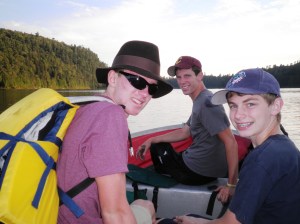
A few years ago on one of the Perry men’s annual Canadian fishing trips we deviated from tradition.
There’s a lake called Marianne we fish because we typically catch dozens of feisty Northern Pike. To get there requires crossing two lakes and taking two hikes through the Canadian wilderness while carrying our supplies.
This particular year we decided instead to drive over the old rutted logging trails to Marianne. I had done it once before so I was confident I would recognize which trails to take.
Three hours into a 30 minute drive we still had not found Marianne. I had a topographical map and instructions from our friend Craig Williams (ironically part of his instructions included discouraging us from driving).
I didn’t listen very well because I was confident we’d find Marianne with no problems.
Yet a number of times we’d arrive at a spot where I just knew Marianne had to be. I’d pull out my map and convinced myself that it had to be right there. When it wasn’t I’d tell the boys that it “might have dried up” or “been hidden by some trees” or some other foolish explanation.
This behavior is what experts call “bending the map.” It means to ignore reality and convince yourself that you are in the right place and that your map is wrong or the surroundings have changed (also called being lost).
“Bending the map” is trying to make reality fit what you want it to be instead of accepting it for what it is. It comes from stubbornness, pride, delusion or in my case simple optimism.
I’m often tempted to “bend the map”, to look at “the numbers” or a situation and believe it’s better than what it really is. It’s then that I have to remind myself of that three-hour tour of Canada so I can begin seeing things for what they are and then take the necessary action in face of true reality.
Are you bending any maps in your life? Don’t waste any more fishing time believing a false reality. Life is too short and there are too many fish to catch.
“Leadership is an Art”

“The first responsibility of a leader is to define reality. The last is to say thank you.” Max DePree in his book Leadership is an Art and repeated to me in my recent meeting with Roger Williams, Executive Director of Mount Hermon.
I’m very appreciative of Roger’s reminder of these words from this great book.
So when I got back to my office on Monday I grabbed my autographed copy and began to flip through it. As I did I realized two important but related facts concerning this book.
First, it is one of the best books on leadership I’ve ever read and was and is foundational in my leadership philosophy.
Second, I saw God’s hand directing Roger to bring Leadership is an Art back to my mind because of work the SpringHill Leadership team is doing in organizational planning.
So I took my copy with me on my trip this week knowing I now had to re-read it.
As I’ve finished it on my flight I’ve been blessed, challenged and affirmed once again because DePree puts into words and stories the heart of leadership. He sets an ideal that is noble, human, convicting and one I aspire to.
It is full of wisdom that is practical, philosophical and speaks to both heart and mind. And it is one of the most quotable books on leadership you will ever read.
It was written nearly 25 years ago so I was worried it was “dated” but I was not disappointed. It reads as contemporary, or maybe even more contemporary, today as it did when I first read it in the late 80’s. Both the truths and DePree’s writing style are timeless.
So I’ve ordered copies for my leadership team. We are going to read it together because it represents the kind of organization and leadership we aspire to.
If you want to be inspired to be the best leader you can be join us in reading (or re-reading) Leadership is an Art by Max DePree. It maybe the best book leadership book you’ll ever read.
Do What Only You Can Do!

For the second time in four months I have had someone share these words with me – “Do what only you can do.”
When I hear the same thing multiple times from multiple people in a relatively short period of time I know I need to listen.
The most recent time I heard these words were from Bob Nienhuis, a good friend and chair of the SpringHill board. We were meeting to go through the annual feedback the board provides me on my job performance.
These words struck hard because I had just heard them a few months earlier.
The first time was when I was teaching our adult Sunday school class at our church. A member of our class, Christine Giesler, responded to my sharing of the struggle I was having finding the time to accomplish work I was convinced (and still am) that God wanted me to do.
Christine told me the same thing Bob had said, “Do what only you can do.” Then she added an additional bit of wisdom in an effort to help me move to this place.
She said, “I’m sure you’re doing a lot of good and important things. But many of these things are things that someone else could do. By holding them and not sharing them with others you are robbing them of the opportunity to share in these important responsibilities and it keeps you from doing what only you can do.”
I’m thankful for this great advice from Christine and the reminder of that same advice from Bob of the ongoing work I’m doing – the work of making sure that, day by day, week by week, I’m doing what only I can do for SpringHill, my family and ultimately for His Kingdom.
Inspiration From A Change in Scenery

As I write this I’m on a plane coming home from a week in California meeting with people, visiting a camp and working on our strategic plan. I have a love-hate relationship with traveling. I hate it because I hate being away from my family and our SpringHill staff.
Yet I love it because I find enormous benefits in having a “change of scenery” including meeting with different people in different places which provides different perspectives on the challenges and opportunities I face personally and we face at SpringHill.
My ideal “change of scenery” always has as its ultimate goal to learn and grow and includes the following:
- Visiting new places – as we did this trip when we visited Mount Hermon Christian Conference Center. This allows me to benchmark myself, our team and SpringHill against another organization.
- Spending time in God’s creation. I’m always moved and inspired when I’m in the middle of God’s handiwork.
- Being in a temporary community of committed and talented people who can push, challenge, critique, discuss and dream with me.
- Having the space to think, pray and plan based on what I’ve learned and seen.
These elements always create a powerful, transforming experience for me.
And maybe it’s also why I’ve committed my career to Christian camping. Because when Christian camping’s done right, when it includes these elements (new places and experiences, God’s creation, temporary communities of like-minded people and space to reflect and pray) Christ uses it transform lives.
So plan a “change of scenery” trip soon and see what good it can do for your work and for your life.
And better yet, in addition to your own “change of scenery”, consider giving a young person a “change of scenery” opportunity this summer by sending them to camp (the best change of scenery there is) so they too can have a life transforming experience.
By the way to see more photo’s from our desert canyon hike click on Perry’s Photo Perspectives.
Leaving a Place Better Than You Found It!

Todd Leinberger, Murphy Felton (former SpringHill staff and current Mount Hermon Staff) and Lisa Olson In spending time in the wilderness I’ve learned two ethical approaches to the impact one should have on the environment when spending time in it.
The first I learned as a Boy Scout. “Leave a place better than you found it.” This meant not only leaving no mark but also removing any marks left by others.
The second ethic is “leave no trace” meaning do no harm as a result of being in the wilderness. This ethic is inherent in the Boy Scout ethic but assumes others will take care of themselves.I’ve been thinking of these ethical approaches this week as Todd Leinberger and myself spent a couple of days at Mount Hermon Christian Conference Center located between San Jose and Santa Cruz, California in the heart of Redwood country. It’s obvious that Mount Hermon and the people of California have an ethic of preserving the beauty of this area.
As part of our visit we spend some time with Lisa Olson, current Mount Hermon executive who spent 22 years on staff at SpringHill. Over dinner I asked Lisa to look back over her tenure at SpringHill and share her proudest contribution.
She didn’t hesitate in answering. Her proudest contribution was that she and her husband Mark led SpringHill to a place where it could multiply itself, a process that took 15 years, resulting in the creation of our Indiana camp.
As I listened to Lisa I realized these two wilderness ethics represent the same ethical options we have when we are part of an organization, community or family.
Lisa and Mark Olson clearly lived out the “leave it better than we found it” ethic. For which I’m thankful.
For me I’m still a Boy Scout at heart. That’s why I too am committed to a “leaving a place better than I found it” ethic whether it’s my work at SpringHill, my volunteer roles in the community or more importantly in my relationships with my family and friends.
The Power of Asking for a Commitment

Of all the good parenting my parents did as I grew up, there was one simple yet brilliant thing my dad did that made significant impact on how I lived during a certain period of my life.
It was one Saturday morning the summer before I entered high school when my dad asked me to go for a ride with him as he ran some errands. This meant he had something to talk about.
The discussion was about the” life choices”, as he called them, I would face in high school. Choices about such things as drinking alcohol, taking drugs and having sex.
He wanted me to know that his and my mom’s expectation was that I would choose what was right; to live as they had raised me to live.
As we finished the discussion, he asked me if I understood what I was facing and what the right choices would be. I answered that I did.
He could have ended the conversation right there and it would have been a successful parent – teenage child discussion. But he took it one more step.
It was a simple, brilliant step.
He asked me to give him my word and make a commitment that I would choose and do the right things over the next few years. .
My response to his request? I gave him my word, and made a commitment to him and my mom.
So, as a result, the story of my high school life was that every time I faced a “life choice” my mind went back to that Saturday morning car ride and the commitment I made. And almost every time (well I wasn’t perfect), because of that moment of commitment to my mom & dad, I made the right choices.
Believe me there were many times I’d wished I hadn’t given him my word but because I did I felt compelled to live up to it.
This is the power of asking for both someone’s commitment and their word and why we should never shy away from doing so. It can be a life changing gift to others that they will never forget.
Creating a Personal Weekly Plan

“Failure to plan is planning to fail”
“Plan your work and then work your plan”
I am a planner so these well-worn clichés are etched into my psyche.
This is why every Sunday I lay out a plan for the upcoming week integrating both the professional and personal parts of my life.
It’s a ritual I will not miss.
Here’s how I do it:
- I review the previous week and see what was left undone and decide what to do with them (add them to the upcoming week, not do them at all, etc.).
- I compile all the ideas, tasks and thoughts I’ve collected over the previous week and add them to my master Outlook Task List.
- Next I look two to three weeks out in my calendar and add to my list any work I need to do to be ready for upcoming meetings and events. I will also resolve any scheduling issues.
- I may block out time in my calendar to focus on an important task that requires quiet to do well.
- Then I will print a pocket-size card of the tasks I’ve chosen to focus for the week. It stays with me (held in a Levenger “shirt pocket briefcase“) all the time. If my list doesn’t fit on a 3″ by 5” card then it’s too long.
- Finally, each morning I will evaluate the previous day and then highlight the tasks that I want to achieve that day.
Simple enough yet when I don’t create a plan I feel as if I’m going through my week running with scissors.
When I do I enter each day with confidence that I know what I need to do to have a successful week.


