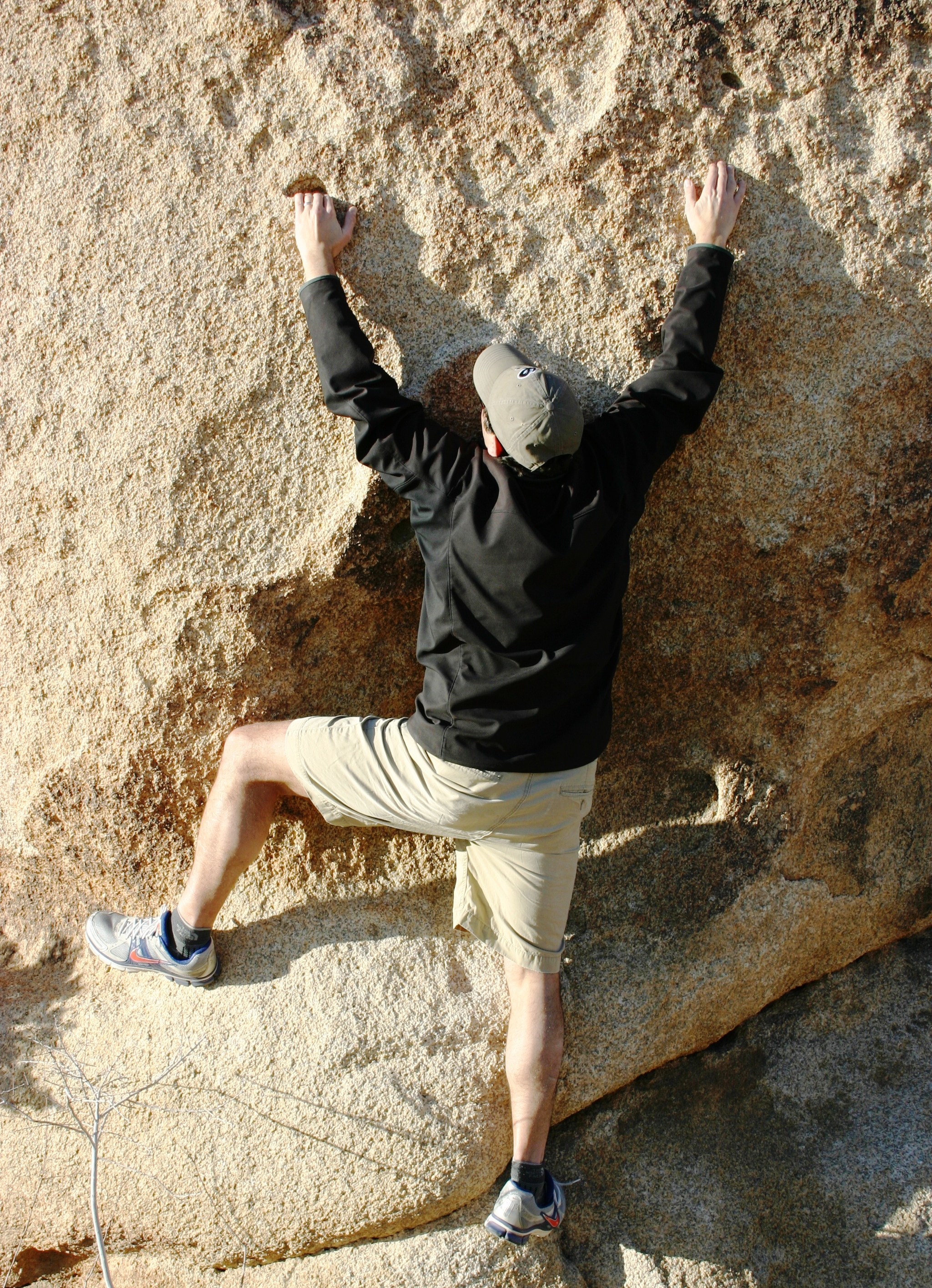
Choosing the Right Measuring Stick
?

Recently, at SpringHill, we’ve made an intentional change in how we evaluate our current performance. As I’ve mentioned in previous posts we track a number of indicators that help us gauge how well we’re performing against our goals and fulfilling our mission.
Even though, for years, we set annual goals, broken down by period (our year’s divided into three periods like a hockey game) and by month, our default position has been to compare our results to the previous year. There are many reasons we’ve done this but I think, at the end of the day, it’s been our desire to always improve that’s made last year’s results our measuring stick. So if we exceeded last year, we’ve improved and because improvement has been a higher priority than achieving our goals, we’ve been satisfied.
Then, over the last year, our team’s recognized that improving isn’t enough, that we work hard at setting achievable goals that align with our longer term targets. Our goals mean something. They’re important, even more important than what we did last year because, though we may be improving, the improvement doesn’t guarantee we’ve went far or fast enough to reach those long-term targets.
So we’ve made the change, it’s official. We no longer have improvement over last year as our measuring stick. It’s now our annual, period, and “split time” goals that we measure our performance against.
We’ve even taken last year’s numbers off our Scoreboard which we review in our weekly Huddle meetings. We’ll continue to use the previous year’s results as input into our goal setting as well as in helping analyze our current position but it’s now performance against our goals that will drive our work.
Funeral Perspective

I attended two funerals last week. I’ll admit I don’t like the reality of death. The Scriptures are clear – God created us to live forever. Instead death stole into the world, not as a welcomed friend, but as an enemy. So I have biblical support for my strong dislike of death.
But, though I despise death, I’ve come to appreciate funerals.
First, I appreciate funerals for the reasons we have them – they provide an opportunity to grieve our loss, to celebrate the life of a loved one, and to be with family and friends.
Yet there’s one more reason I’ve grown to appreciate funerals. It’s the serious perspective that can be gained, whether we like it or not, when we come face to face with death.
These funerals were for two very different people who died at two different places in their lives, one at the end of what we’d call a good long life, the other passed in mid-life. As I sat quietly in each service I asked myself two perspective giving questions. Each question had an eye on my potential funerals – one at the end of a long life and the other, more immanent, at mid – life.
The first question was simply “who’d be at my funeral and why”? The answer’s very revealing about the significance my life has had on others – whether it was positive, negative or neutral.
The second question is “what would be said about me?” Again the answer shines a needed light, showing what, if any, difference I made in the world. It also points to what I did or didn’t do with the gifts and abilities God gave me throughout my life.
So last week I not only attend two funerals, I had a needed perspective checkup on my life and how I’m living it.
Running for Clarity

For years I’ve been a runner. I run because it’s a simple, inexpensive way to stay in shape. Running is also an excuse to be outside, regardless of the weather. As such I’ve never owned a treadmill because, when I’ve had the opportunity to use one, I’ve found them to be well… torturous.
I have also discovered another significant benefit of running – when I run I find better solutions to pending problems, gain new perspectives on relationships, have better focus on a message that needs delivering or pray with more clarity.
The only reasonable explanation I’ve heard for this phenomenon is that running, with its physical rhythm of moving and breathing, especially outside, clears the mind of the clutter that can so easily cloud our thinking.
When I’ve had periods when I’m not running or not running much, I see a decrease in the quality of my thinking, especially around complex issues. On the other hand, as I look back on the last 30 years of my life, I can almost connect every good decision I’ve made, or idea I’ve had, to a run I’ve taken.
Now running isn’t for everyone. But doing something that includes the following three elements is a must if we’re to have any hope of experiencing clarity of thinking:
Rhythmic physical activity
That’s so simple to do it requires no thinking to do it
And keeps any potential distractions away
Such things as biking, walking, swimming or rocking in a chair (my 2nd favorite activity after running) can create the right combination of these elements as well.
So whatever the activity, making the effort to do it on a regular basis will de-clutter our minds and give us the clarity of thinking that’s necessary to deal with the complex world in which we live.
6 Questions Every Organization Needs to Answer, Part 1

Over the last week our staff and board reviewed our answers to 6 key questions every organization should answer. They are the highest level description of the destination and the guard rails every organization needs to assure long-term effectiveness.
Here are the 6 questions we reviewed and the place SpringHill provides the answers:
- What do we believe to be true? Statement of Faith.
- Why do we exist? Mission
- What’s important to us? Core Values
- What makes us distinct? Philosophy of Ministry
- What do we want to achieve in 15, 20 or 25 years? Big Hairy Audacious God Goal (BHAGG)
- What do we want to become in 5, 10, 15 years? Vision
The answers to the first 4 questions focus on the “now” and need to be a present reality within the organization. Thus they are the guard rails that keep the organization from getting off track.
The last 2 questions are future focused and provide the organization’s long-term destination. These answers need to be guided by and consistent with the answers to the first 4 questions.
All the answers should be treated like the Constitution of the United States – slow and laborious to change. Why? Because any change needs to appropriately involve every stakeholder group of the organization, and this takes time. If the answers keep changing it’s because the questions have never been truly answered.
Not only is it necessary to answer these 6 questions, it’s absolutely essential that the answers drive everything else in the organization. Every decision made within the organization is to be subservient to the answers to these questions. That’s why these answers are so important, and why they should rarely change.
Finally, we believe answering these questions not to be, a an act of calculation, but an act of discovery, a discovery that will pay richly in a long future of effective ministry.
To see SpringHill’s answers to the 6 Key Questions click here.
What We do During These Winter Months

It’s during these winter months that I’m often asked (mind you, rarely in a judgmental manner) “what do you and SpringHill do all winter long?” People know what SpringHill does during the summer – we have summer camp – but it’s the other nine months of the year that seem to be a mystery to people.
Now I’m not offended by such inquiries because they give me an opportunity to share all that we do during these busy months of winter. So, just in case you’ve also wondered, let me share with you the answer to the question “what do you and SpringHill do all winter long?”
In no particular order here’s a sampling of our work this winter:
Visit college campus’ across the Midwest to find, recruit, interview, reference check, do back ground checks and contract a 1000 people to work this summer.
Then prepare comprehensive and effective training for each of these 1000 new staff.
Create, plan and prepare 5 major programs and curriculums for campers and summer staff.
Make improvements to our property and facilities in time for our first campers to arrive.
Identify 65 church and ministry partners in 12 plus cities to host our Day Camps as well as identifying dozens of partners for 2013.
Market, sell, register, collect releases, medical forms, payments and answer the questions of parents for 23,000 summer campers.
Raise money to make the needed capital improvements and pay for 2500 camper scholarships.
Work out the logistics of weekly opening and closing days at 9 different SpringHill locations.
Oh yes, I nearly forgot, we’ll also serve nearly 12,000 retreat campers between now and the arrival of our first summer camper.
So as you can see, there’s no off-season at SpringHill, just a different season with different work. So as you think of SpringHill in the months to come, please remember this list and then pray for our staff that we’ll do all our work well, so that God might use our efforts to transform the lives of campers and staff we’ll have the privilege to serve in the coming months.
The All Staff Meeting

Eileen Zilch discussing some Key Indicators We just finished one of our 3 yearly All Staff Meetings this morning. We do one at the end of each of our three “seasons” scheduled along each of our three yearly Board of Director’s meetings. The meeting allows the entire staff to hear and interact with the same information that our board receives, including the results of the previous season and a look ahead to the rest of the year.
The meeting has evolved over time, moving from something that might be compared to a locker room speech to a more businesslike model. We continue to try to balance being “businesslike” and having that pre-game locker room feeling. Depending on the meeting we tend to lean one way or another.
The tone of today’s meeting clearly leaned towards more businesslike. Part of the reason was the large number of items on the agenda.
Our standard agenda includes:
Performance against our goals (see our weekly huddle goals –click here)
Progress on Key Initiatives
Ministry highlights and stories
President’s message (content varies meeting to meeting)
One other topic
We share the presentation responsibility among our management team. Today we had 7 different people present. Our goal is to share information quickly and succinctly allowing time for questions and comments by staff.

One of our biggest challenges has been the growing number of staff who have offices outside of Evart, MI. We’ve struggled finding reasonably priced technologies that would effectively include remote staff. Today, by using GoToMeeting, we had our best “technology” meeting yet, marked by a relatively high interaction between people in 6 locations. Not perfect, but less costly than people driving to the location.
Finally the highlight of these meetings is the simple fact that the entire SpringHill team is “together”, which, for me, is always a great thing.
The 360⁰ Evaluation
 Recently I initiated a 360⁰ evaluation of my leadership. I did it in response to a recommendation in the book What to Ask the Person in the Mirror and after discussing the topic with my peer learning group.
It’s important I understand my leadership strengths and weaknesses including any blind spots I might have. Knowing this information is especially critical in light of SpringHill’s current and future growth.
As I expressed to the folks I asked to participate in the evaluation, I do not want my leadership to be a hindrance to SpringHill reaching its potential. Because the truth is, the effectiveness of an organization is always less than or equal to the leadership capacity of its chief executive, never greater.
So if you’ve ever contemplated having a 360⁰ evaluation of your leadership, consider the following recommendations from my experience and the experience of my peers, in helping make the process more fruitful and productive.
- Have an outside human resources professional administer the evaluation on your behalf.
- Use a reliable and valid 360⁰ process. I used The Center for Creative Leadership’s evaluation tool. It’s proven and compares your feedback to a database of 100,000’s of leaders from around the world.
- Don’t make it part of your performance appraisal, it’s better used for developmental purposes.
- Initiate the review; don’t wait until someone initiates it for you. You want feedback sooner than later and not when someone (like your boss) thinks there might be an issue, because, in that case, it might be too late.
- Be open to all the feedback and be prepared to make changes.
Feedback isn’t always easy to get and receive, but as Proverbs 10:17 says “He who heeds discipline shows the way to life, but whoever ignores correction leads others astray.”
The Symptoms and the Cure for the Out of Control Schedule
 This week I met with my friend and advisor Bill Payne. The topic I sought his input on was prioritizing and managing my time. It’s become a bigger challenge as my job continues to evolve in light of SpringHill’s growth (see my post Time – One of Most Valuable Gifts). As always, Bill provided wise and practical input.
Below are the symptoms I’ve been experiencing over the last year and some of Bill’s wisdom to help cure the out of control schedule I’ve had. As you read, ask yourself – “are you experiencing any of these same symptoms?” If you answer yes, then join me in trying some of Bill’s input for yourself.
Symptoms:
My time and schedule feel like they’re being driven and managed by everyone else but me.
I’ve had barely enough time to do all that I need and should do in my role.
To accomplished both what I need to do and what everyone else has expected me to do, I’ve cut short or cut out such things as exercise, sleep, house and home projects, reflection time and planning, time with friends and even, I hate to admit this, at moments, time with my family.
The Cure:
Block out time in my daily and weekly schedule as “no meeting” times to assure I have space to do both the important things and the things only I can do.
Trust my team to do their work and to do it well.
Stop trying to please everyone by saying yes to everyone’s requests and begin to say no in appropriate ways. Bill promised that saying no becomes easier the more you say it.
Then stop feeling guilty when I say no.
Finally, stop over playing my desire to please, a good quality I have, until taken to the extreme – which is trying the impossible – to please everyone all the time.
The Truth about Faith and Planning

In Christian organizations we often live in the tension between faith and planning. The tension comes because we believe faith and planning to be polar opposites.
Christian history is full of stories of “great people of faith” who did miraculous things for God. We want to be a part of such stories. On the other hand, it isn’t nearly as appealing to be part of a story centered on a cold and calculated plan, professionally executed. Instead we want to “let go and let God” and become part of a “miracle”?
We want to be like Peter who stepped out of the boat to walk on the water but too often we ignore Nehemiah’s thoughtful and intentional plan to rebuild Jerusalem’s wall, or David’s strategic vision and preparation to build the temple. Did David and Nehemiah have less faith than Peter? Or how about this question, would you rather walk on water for a few seconds or rebuild a city or build God’s dwelling place on earth?
I know my answer; I want to do something significant and lasting. And to do something significant and lasting requires planning, preparation and vision. And it also requires prayer (re-read Nehemiah) and faith (re-read David’s temple preparation).
Like Nehemiah and David, God has called us to be stewards of our time, resources, gifts and abilities. As a result, a good steward plans and then assures those plans align with their master’s intentions. And the beautiful thing is, the better the stewardship, the greater the opportunity of being a part of a miracle.
Therefore we need to stop seeing faith and planning as polar opposites, instead we need to see them as essential companions in our work. When we do this, God will do His greater work, allowing us the possibility of being a part of a miracle that’s significant and lasting.
Our Relationship to Creation

I’m reading the last book written by John Stott before he passed away, titled The Radical Disciple. If you haven’t read it you must. It’s not often we have the privilege to read the intentional final published words (Mr. Stott knew this would be his last book) of such a significant person on such an important topic.
The sub-title to the book is Some Neglected Aspects of Our Calling and true to the sub-title, Stott covers a wide range of neglected discipleship topics, including one chapter titled “Creation Care”. The fact that John Stott, in his last book, covers this topic, only affirms the great respect I’ve always had for him.
Let me share with you just a bit of his perspective on creation care.
“The Bible tells us that in creation God established for human beings three fundamental relationships: first to himself, for he made them in his image; second to each other, for the human race was plural from the beginning; and the third, to the good earth and its creatures over which he set them.
Moreover, all three relationships were skewed by the Fall. Adam and Eve were banished from the presence of the Lord God in the garden, they blamed each other for what had happened, and the good earth was cursed on account of their disobedience.
It stands to reason therefore that God’s plan of restoration includes not only our reconciliation to God and to each other, but in some way the liberation of the groaning creation as well. We can certainly affirm that one day there will be a new heaven and a new earth, for this is an essential part of our hope for the perfect future that awaits us at the end of time (e.g., 2 Peter 3:13, Revelations 21:1). But meanwhile the whole creation is groaning, experiencing the birth pains of the new creation (Romans 8:18-23). How much of the earth’s ultimate destiny can be experienced now is a matter of debate. But we can surely say that just as our understanding of the final destiny of our resurrection bodies should affect how we think of and treat our bodies we have at the present, so our knowledge of the new heaven and earth should affect and increase the respect with which we treat it now.”