Collective Wisdom

The 2011 SpringHill Board Saturday morning we had our winter SpringHill board meeting which followed for me a furious week of meetings with SpringHill board members, staff and the leadership team.
Non-profit boards can be double edge swords for people in my position as CEO. They can be helpful on many fronts but they can also get in the way of the CEO and staff doing their work.
Admirably the SpringHill board is long on support and assistance and very short of getting in the way. As a matter of fact I can’t think of any situation in my ten years in this position where they hindered my ability to do my job.
What they’ve done and did once again on Saturday was:
-
Ask good questions that make us think.
-
Provide insights and perspective from their experiences that we don’t have.
-
Encourage and challenge us to make corrections when necessary and to continue to do more on behalf of Christ’s Kingdom.
-
Affirm what is going well and right.
-
Assure we are “on strategy” meaning on mission, vision and aligned with our core values.
-
Provide reasonable and effective boundaries for us to do our work.
What they don’t do and didn’t do on Saturday was:
-
Tell us how to run SpringHill.
-
Restrict our ability to move forward on our goals and plans.
-
Get bogged down in the details.
-
Send us off on rabbit trails.
-
Have different agenda’s amongst themselves.
-
Send us mixed signals.
Having an effective board doesn’t happen by accident and that’s certainly the case for the SpringHill board. There has been a very intentional plan and action by our board to assure they provide the right oversight and stewardship of this ministry.The results are having the right people on the board fulfilling the right roles and doing their work effectively. This has assured that SpringHill continues to fulfill of its mission and achieves its goals not just now but well into the future.
-
Have I Ever Told You I Love My Job?

When people ask me what I do for a living I tell them I get to be at camp every day. How great is that? What better place is there to be and work other than camp? I can’t think of very many.
And today is one of those reasons why I love what I do for a living. You see we had our annual All Staff Meeting where we reviewed our updated ministry (strategic) plan for the year.
We always have an internal staff theme for our annual ministry plan. For 2011 we’ve taken on a sports team theme. We are playing for the championship this year – which means having the very best year in SpringHill’s history (as you can see our team is not shy about wanting to achieve great things for the Kingdom).
So we watched some clips from some great sports movies. We had different members of our team share sections of our ministry plan (game plan) found in our 2011 SpringHill Playbook.
We asked each other questions like “how can the rest of us help you achieve these goals?”
We each received a team jacket and took the 2011 SpringHill Team photo.
We even tried a version of the “We are Marshall” cheer changing it to, you guessed it, “We are… SpringHill.”
But it’s not all the fun sports analogies and clichés that made the day great.
It was being with the SpringHill team. These people not only love the mission and vision of SpringHill but also gifted and talented. They are more than capable as individuals and as a team to assure we win the 2011 championship. Now that’s a great place to be.
A coach once told me “winning is fun” to which I agree. I would only add “winning is even more fun when you are doing it with teammates you love.”

The Power of Common Values and Multiple Perspectives

Eric Russ and David Bond Having different perspectives in the same room is powerful. Perspective comes from one’s life experience. So varied perspectives means varied life experiences and varied life experiences makes an organization rich, more effective in fulfilling its mission and more reflective of Christ’s Kingdom.
Yet differing perspectives and life experiences are not enough. Shared life commitments and values are also essential for mission fulfillment. And more importantly they’re required for an organization to better reflect the Kingdom of Christ.
Today I was in such a room. I was providing an orientation for two new SpringHill board members, David Bond and Eric Russ. These two men couldn’t be more different in their life experiences.
David grew up in a positive, faith filled suburban home. Eric grew up in a broken, drug and alcohol filled inner city home.
David followed a path of faith since childhood. Eric lived a life headed for prison or worse until his late teens.
Today David is a business owner in suburban Detroit. Eric is a pastor of a church in inner city Detroit. Their zip codes could not be more different.
David’s life and work brings him into relationships with primarily people of means. Eric’s life and work primarily brings him into relationships with those marginalized and have no voice in our society.
Their different lives bring very different but needed perspectives to our board and to SpringHill. For this I’m thankful.
But it’s what they have in common that brings power to their different perspectives.
Both Eric and David love and aligned with the mission and values of SpringHill.
More importantly both Eric and David bring a vibrant faith in Jesus Christ and a commitment to His Kingdom.
This means they both value the work of the Kingdom and are actively involved in it.
Their common values bring power to their varied perspectives.
What I watched in the meeting room today is a picture of what a healthy, effective organization looks like and more importantly a picture of what the reality of Christ’s Kingdom really is.
Working in Tension

“Some tension is necessary for the soul to grow.”
This past weekend we had the annual meeting of the founding churches of SpringHill. These churches’ involvement goes back to SpringHill’s inception back in 1969. They continue to share the values and mission of SpringHill and are as committed as we are to their preservation.
But as we talked during our meeting I shared one change that I’ve found personally challenging and hard to accept. It’s my inability to know on a personal level all the families and churches involved with SpringHill as was once possible in those early days.
Today, there are 100’s of churches and 1000’s of families from around the world who participate in SpringHill Experiences in 40 locations around the Midwest. In our first summer we had about 300 campers. This up-coming summer we expect over 15,000 campers and 45,000 for the entire year. For me to know all these people is an impossible dream.
The challenge for us is to make today’s families and today’s churches feel as much a part of SpringHill as those original churches, and the families they represent, did in 1969. And like those early days we want to continue to reach more and more kids and serve more and more churches.
Thus lays the tension I live with every day in my work. The tension between our desire to continue to reach more and more kids through the SpringHill Experience and yet continue to conduct our ministry in the context of personal relationships and intimate communities. It’s a tension I’ve learned I cannot resolve alone.
The resolution, I’ve discovered, comes from an effective team of people who can share this work, the work of building relationships and connecting with families and churches. Though I desire to know everyone, I now find joy in seeing our team share in this good work and assuring we fulfill our vision of reaching more kids and doing it in a relational, SpringHill way.
A “Michigan man” or a Michigan “type man”

Bo Schembechler was not a “Michigan man” when he took the head coaching job at the University of Michigan. Meaning he had no prior relationship with the university as a student, player or coach. But no doubt in the minds of Michigan fans and alumni he turned out to be the model Michigan man and the measure of all subsequent coaches. As a matter of fact he’s the person who coined, or at least made popular, the phrase “Michigan man” when he was athletic director.
The problem with much of the media and fan discussion about their next head coach is that it’s centered on the idea that Michigan needs a Michigan man. If this was the line of reasoning in 1969 Bo would never have become the Michigan coach. What Michigan needs is a Michigan “type man”. One who fits the culture of Michigan and will deliver on the goals of the football program.
At SpringHill building and maintaining our unique culture is one of our highest priorities. We look for people who fit our culture and have the gifts and abilities to help advance our mission. We want a SpringHill “type person” not particularly a “SpringHill person.”
This is an important distinction for a number of reasons. First, our goal is to always to hire the very best person available for any job we have open. This requires the largest candidate pool reasonably possible. The “SpringHill person” pool can be too small and limiting.
Secondly, sometimes hiring a person who fits our culture but has no SpringHill experience allows us to have new ideas and perspectives brought into the organization. It would be arrogant to think we have nothing to learn from folks who have never been “SpringHill people”.
The one exception is when filling the top position in an organization. That person should come from within “the family”. Jim Collins advocates this in his book “Good to Great.” By the way in Michigan’s case the head football coach is not the leader of the University or even the athletic department thus this exception doesn’t apply.
So as a life long Michigan fan and steward of our family’s season tickets I want the best fit and qualified football coach available. Using this hiring approach works for many quality organizations including SpringHill and even once worked for the University of Michigan.
Getting Ready for 9000 Winter Retreaters
This weekend kicks off our Winter Teen Retreat season at our Michigan camp. We are expecting over 9000 students and their leaders over 12 weekends. This means there’s a lot of work to do to before we welcome them to SpringHill on Friday night.


Each year during the week before the season begins we have an all staff work day to help prepare camp. We have teams building sets, cleaning cabins and buildings, prepping activity areas, creating a prayer labyrinth and a host of other essential work. It’s a great chance for staff members who normally don’t work directly with our campers and guests to be involved in our second biggest season of the year. It helps all of us feel a part of these weekends.


One of the coolest things we do on this day is pray for every one of the 300 or so churches who will attend this winter along with the speakers and bands who will be part of each weekend. It’s important to us that the entire season, including each weekend be covered in pray. We pray for safety, for community building within groups and especially that the life of each student and leader be transformed through hearing, seeing and experience Christ.
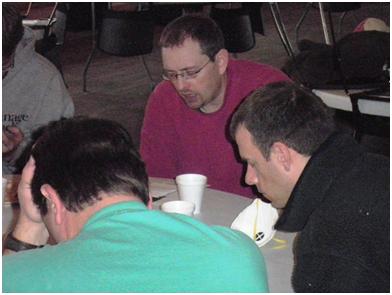
So, as you think of Winter Teen Retreats over the next few months, please join us in praying for these students, their leaders and churches that their SpringHill Experience will be all God intends it to be.

Vulnerability and Transparency

Vulnerability and transparency are both valued but different qualities
Vulnerability means to open oneself up to potential harm. So I recommend a trusting relationship as the best place for vulnerability. When vulnerability is part of a trusting relationship it will build more trust. This is why vulnerability is essential in interpersonal relationships.
It’s also why we should not display vulnerability outside of a trusting relationship – consider what the University of Michigan head football coach, Rich Rodriguez, has endured over the past two weeks when he was vulnerable in the presence of the media he obviously does not have a trusting relationship with.
For all of vulnerability’s excellent attributes it doesn’t serve organizations nearly as well because, by their nature, organizations are public. Since it’s impossible to have a trusting relationship with all of the public displaying public vulnerability puts an organization at a high degree risk.
So being vulnerable, no matter how good it is for individuals in trusting relationships, it’s not good for organizations or public figures because you cannot have a trusting relationship with everyone.
Transparency on the other hand is the better road taken by both public individuals and organizations. Transparency is different in that it doesn’t require lowering the defenses as vulnerability does. Yet transparency lets “the light in” so others can see what’s really there. It’s being honest and forthright without being vulnerable and thus open to harm.
As a leader I believe strongly that for public people and organizations, such as SpringHill, transparency is a mandate. Transparency builds trust with the public without putting the organization at high risk of harm.
The World’s Best Marketing
Do what you do so well that they will want
to see it again and bring their friends.
WALT DISNEYNo matter what work you or your organization do the loyalty of the people you serve is your most valuable asset. This is true whether you are a for – profit business or a not – for profit charity/ministry. The result of loyalty is not only that you have the opportunity to serve people over and over but they will also become your promoters by recommending your organization to their friends.
At SpringHill our “customers” include campers, camper parents and grandparents, local churches and supporters (volunteers, prayer partners and donors). Over the years we have measured their level of customer satisfaction using ever-changing methods. This has been helpful but at the same time, it also has been frustrating.
Frustrating because we are always wondering if we are getting the clearest picture of this important question – do those we serve feel so strongly about us that they will recommend us to their family and friends?
This summer two of our team members, Eileen Zilch and Sue Boike, benchmarked the customer service of Zingerman’s Delicatessen in Ann Arbor, MI including attending their customer service training. One of their key take always was Zingerman’s use of a customer service measurement called Net Promoter Score (NPS).

Eileen and Sue train SpringHill staff in customer service
NPS was created by Fred Reichheld and Bain & Company and is published in Reichheld’s book “The Ultimate Question: Driving Good Profits and True Growth”. NPS is determined by asking your customers the “ultimate question” which is “Based on your most recent experience with us, using a scale of 0 to 10, where 0 equals ‘not a chance’ and 10 equals ‘in a heartbeat’, how likely are you to recommend SpringHill Camps to a friend?”
The idea of the “ultimate question” is an answer to our prayers. First because the measure is simple and proven and allows us to benchmark against other organizations and secondly (and more importantly) it tells us whether we are creating such outstanding, life transforming experiences that people will not only want to come back but will bring their friends. We tested the use of NPS this summer and will continue to implement this measure throughout SpringHill over the next year.
My next posted will be an article written for a local newspaper by one of our campers about her SpringHill experience. The story is inspiring but also demonstrates the power of having your customers be your key promoters.

100 Years and Counting
How many organizations have the opportunity to celebrate a 100 year birthday? Not many. Hardly any. I have to think hard to make a list. Yet I had the opportunity this past weekend to be at such a birthday party. It was for Northern Michigan School (NMCS) in McBain, Michigan.

As I was enjoying the party (my kids attend this school) with many of the people who, over the years, have become dear friends I kept asking myself what does it takes for an organization to have such a party.
Though small in size NMCS has some very big things going for it that brought it to a 100th birthday. Things that any organization desiring long-term impact need to have.
Things such as:1. Generations of families being committed to the work.
2. Great people involved at all levels be it staff, volunteers, donors and ambassadors.
3. Clarity on purpose.
4. Willingness to change with out loosing focus on purpose. Very hard to do but essential for a 100 year birthday to be a reality.
5. Slow enough to change so that you are not “tossed back and forth by the waves and wind” of ever fad.
6. Reach out to people outside the traditional community which supports the work.
7. Hold to traditions that make the organization special and loose the ones that hold it back. Be not afraid to cut those traditions loose that hurt the organization today.
8. The organization needs to be owned emotionally by a larger community never by 1 person or a small group of people.
9. The focus always needs to be on others and their ongoing well-being. Love, celebration, honest accountability, friendship and other key ingredients that create community assure longevity.
10. Acknowledging that there is always something bigger than the organization. Something bigger being served. In NMCS’ case it is Christ and His Church.
NMCS has it going, and I have no doubt will celebrate their 200 year birthday as a result. More importantly to me personally is the privilege we have had as a family to be a part of such an organization and be the recipient of its great work.

Where the Heart Is!
“Where your treasure is, there your heart will be also.” Matthew 6:21
The beauty of not – for – profit organizations and ministries like SpringHill are that they are designed to receive resources from others free of charge. It’s beautiful not because the resources are free but because of what it says about the people providing the resources. It says they believe in mission of the organization, the people who are responsible for it, and most importantly, the impact the organization is having on the lives of others.
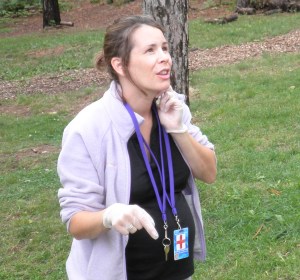
Dr. Kim Mitcham gives one week each summer as our Michigan camp medical Doctor. There are few other honor’s that an organization can receive then needed resources given as a gift. For an organization like SpringHill these gifts come as gifts of time, talents, prayer focus, services and products, and financial resources. Each enables us to continue to move forward in carrying out our vision and fulfilling our mission.
It’s an honor because the gift implies trust. People entrust us with resources they been entrusted with.
It’s a privilege because gifts provides us an opportunity to work on behalf of others in our common mission and vision.
It’s a responsibility because we now are the new stewards of these resources on behalf of the previous stewards and more importantly on behalf of Christ Himself.
Finally, by receiving people’s gifts we are receiving a part of their hearts (where your treasure is…) and there is nothing more important to a ministry like SpringHill then having the committed hearts of like-minded people involved.
We are blessed beyond what words can adequately express for the 1000’s of gift givers to SpringHill. From the faithful volunteer to the prayer warrior to the benefactor who provides financial resources. We could not exist without them and even if we could, with out their hearts our work would not be all that it should be.

Sally, one of our loyal volunteers who gives of her time and talents to SpringHill. Working registration on Opening Day. 
Dr Joe and Allison Kochan both of whom volunteer for at least a week each summer. 
Long term supporter and volunteer Owen Gussler.


