Getting Passion Right!

“Passion” is one of the words of the moment.
We cheer athletes for having it and criticized them for not. We expect politicians, artists and business people to have it. It has become the one necessary qualification for success. If you have passion it covers all sins. And if you don’t, it doesn’t matter how effective you are, you’ve fallen short.
Two friends of mine, April Gann and Carly Jones, have recently written about a Jim Collins’ video that applies his Hedgehog concept and its three circles to individuals as he did for organizations in his book Good to Great. And, as you might remember, one of his three circles is “what you are deeply passionate about” which he now applies to his individual version of the Hedgehog concept.
I love Jim Collins stuff and I particularly like the idea of the Hedgehog concept being used by individuals.
The question I have is does Collins and all the rest of us really understand the true meaning of passion?
This is an important question. Because if it’s what’s expected of us, what we expect of others and it’s now a requirement for success then we’d better know what we are signing up for.
When we think of passion what do we think of? Often it’s used in place of the word “enthusiasm” and means having a high level of emotion for something. This is why we want it for ourselves and expect it from others.
But here’s the kicker. As important as enthusiasm is it’s not passion. Not even close.
The word “passion” as it’s come down to us from the Greek and Latin means something totally different.
It means “to suffer.”
That’s why we speak of the “passion of Christ” not the “enthusiasm of Christ.” They are two radically different things.
Seeing passion in its correct light raises two questions we all have to ask.
First, should it ever be our place to expect someone else to suffer for something? Its one thing to expect enthusiasm but it’s another to ask someone to suffer.
Secondly, when we ask ourselves the question ‘what are we passionate about?” we should rephrase it to “what am I willing to suffer for?” This is the better question and requires prayer and reflection before we answer it.
So I’ve concluded for my life that I will be enthusiastic about a lot of things but only choose to be passionate about a few. Those few things center on people and Christ and His Kingdom. We are not called to be passionate about anything else.
Compliments, Integrity and Being Memory Makers
 I appreciate compliments that are creative, un-expected, sincere and acknowledge what is truly important. The SpringHill team received such a compliment a few weeks ago from Duffy Robbins, a leading youth ministry expert who was speaking at one of our Winter Retreat weekends.
After the Saturday morning session Duffy met for a few minutes with some of our key church partners who were on camp for our annual Council of Advisors meeting.
As he was sharing about the significance of these weekends for teenagers and their youth groups he made this comment…
“You already know this but SpringHill staff are not programmers they are memory makers.”
I was totally caught off guard with this comment. It struck me deeply and was incredibly affirming on a number of levels.
But what made this statement such a powerful compliment?
First, it was unexpected and sincere. We were looking to pick up a few nuggets of wisdom from Duffy about the current state of youth ministry but he instead gave us this wonderful gift.
Second, the spontaneous and creative use of these words stuck with me.
Third, Duffy’s compliment affirmed one of the highest values we have in any SpringHill Experience – that they be life transforming and thus memorable, something that will impact a person the rest of their life.
And most importantly Duffy took what we do – creating life changing experiences – and said, in essence, “This is not just what you do but who you are”.
Wow. Please know we receive our fair share of compliments but this one was one of the finest I’ve ever received on behalf our team. Do you see why? It’s not because it speaks about a new way to describe our work but instead it speaks of our integrity.
You see integrity is when what you do and how you live aligns with who you say you are or want to be.
So whenever someone acknowledges publicly that what you do aligns with who you are, either as a person or as an organization, it’s not just a compliment it’s a statement that goes much deeper. And there is no greater gift someone can give you than to affirm your integrity in a memorable way.
Looking Back to See the Future
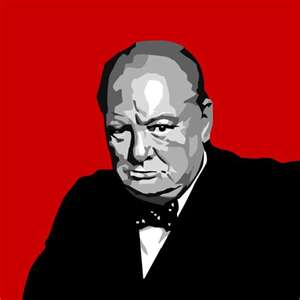
One of my favorite historical people is Winston Churchill. I’ve read a number of books about his life and leadership.
One of the most amazing qualities I’ve found about him was his uncanny ability to see into the future and articulate it.
Most of us know of his predictions concerning the rise of Nazism in Germany in the early 1930’s and the impact it would have on Europe. Yet the one visionary statement that I’ve found even more remarkable was his prediction of the fall of communism.
In 1953, at the height of the cold war, he told his assistant John Colville that if Colville lived a normal life span that he would assuredly see Eastern Europe free of Communism. His normal life span would put him alive well into the 1980’s exactly when Communism fell in Eastern Europe.
That ability to see and articulate the future would qualify for as a visionary by anyone’s standards.
One other interesting quality of Churchill I’ve admired was his love of history. He wrote a number of historical books including the monumental The History of the English – Speaking Peoples.
Is it possible that because Churchill was a student of history that he was also a visionary?
In Kouzes & Posner’s The Leadership Challenge they write “When we gaze first into our past, we elongate our future. We also enrich our future and give it detail as we recall the richness of our past experiences. So, to be able to envision the possibilities of a distant future, to enhance your ability to be forward-looking, look first into your past.”
Kouzes & Posner also cite a study by Omar A El Sawy from the University of Southern California which looked at the ability of two groups of CEO’s to envision the future.
One group clearly could articulate a distant future and one could not.
What was the difference between the two groups? The group that looked deepest into the future was the group that looked first and farther back into their pasts.
Think about that for a moment, the ability for a CEO or anyone to see into the future begins with looking into history including one’s own past.
There is no doubt in my mind that this is exactly why Churchill became a visionary.
And as a leader, if I’m to have vision, I need to challenge myself to be a student of my personal history, the history of the organization I’m leading as well as history in general without becoming its slave. It’s within the context of history that I can begin to have vision for my life, my family and the ministry I’m entrusted with.
Snow Storms and Making Decisions

My car covered with ice. I’m in the eye of what’s being called potentially the severest winter storm in memory. I’m in Indianapolis which is all shut down and looks like it will be for the next few days.
When I’m traveling storms, like any obstacle, create a pile of decisions.
“Do I continue with my plans or postpone?”
“What if it’s not as bad as they say?”
“What if it is?”
“What’s best for the other people involved in the plans?”
“If I postpone when will I have another opportunity to do what I planned on doing in this trip?”
The challenge is there are no right answers to these questions. There is no verse in Scripture, no management book that specifically addresses these situations. I can’t Google it for an answer.
I have to use my best judgment, as well as the judgment of others involved with the plans to make the best decision. And I pray for wisdom, for God’s Spirit to direct my decisions.
The key is, as with this trip, is to make a decision and then commit to its success. To make a half-hearted decision is more often than not the worse option. Once I committed to coming down to Indy I did what I needed to do to assure the trip’s success.
This is where the risk is and why it’s easy to be half-hearted in a decision, because we are afraid of failure. Yet the chance of failure increases without a full commitment to the decision.
So even though I’m in a hotel wondering if I will make it home to see my son Mitch’s basketball game tonight I also know that I’ve done what I could to make this trip successful.
And the good news is my meeting is still on so the purpose of the trip appears to be within reach.
I’m now home as I finish this post. Our meeting this morning was fantastic and exceeded my expectations. And I was able to get home just before phase two of the storm and catch Mitch’s game.
Making a decision and committing to its success made the difference.
Collective Wisdom

The 2011 SpringHill Board Saturday morning we had our winter SpringHill board meeting which followed for me a furious week of meetings with SpringHill board members, staff and the leadership team.
Non-profit boards can be double edge swords for people in my position as CEO. They can be helpful on many fronts but they can also get in the way of the CEO and staff doing their work.
Admirably the SpringHill board is long on support and assistance and very short of getting in the way. As a matter of fact I can’t think of any situation in my ten years in this position where they hindered my ability to do my job.
What they’ve done and did once again on Saturday was:
-
Ask good questions that make us think.
-
Provide insights and perspective from their experiences that we don’t have.
-
Encourage and challenge us to make corrections when necessary and to continue to do more on behalf of Christ’s Kingdom.
-
Affirm what is going well and right.
-
Assure we are “on strategy” meaning on mission, vision and aligned with our core values.
-
Provide reasonable and effective boundaries for us to do our work.
What they don’t do and didn’t do on Saturday was:
-
Tell us how to run SpringHill.
-
Restrict our ability to move forward on our goals and plans.
-
Get bogged down in the details.
-
Send us off on rabbit trails.
-
Have different agenda’s amongst themselves.
-
Send us mixed signals.
Having an effective board doesn’t happen by accident and that’s certainly the case for the SpringHill board. There has been a very intentional plan and action by our board to assure they provide the right oversight and stewardship of this ministry.The results are having the right people on the board fulfilling the right roles and doing their work effectively. This has assured that SpringHill continues to fulfill of its mission and achieves its goals not just now but well into the future.
-
Have I Ever Told You I Love My Job?

When people ask me what I do for a living I tell them I get to be at camp every day. How great is that? What better place is there to be and work other than camp? I can’t think of very many.
And today is one of those reasons why I love what I do for a living. You see we had our annual All Staff Meeting where we reviewed our updated ministry (strategic) plan for the year.
We always have an internal staff theme for our annual ministry plan. For 2011 we’ve taken on a sports team theme. We are playing for the championship this year – which means having the very best year in SpringHill’s history (as you can see our team is not shy about wanting to achieve great things for the Kingdom).
So we watched some clips from some great sports movies. We had different members of our team share sections of our ministry plan (game plan) found in our 2011 SpringHill Playbook.
We asked each other questions like “how can the rest of us help you achieve these goals?”
We each received a team jacket and took the 2011 SpringHill Team photo.
We even tried a version of the “We are Marshall” cheer changing it to, you guessed it, “We are… SpringHill.”
But it’s not all the fun sports analogies and clichés that made the day great.
It was being with the SpringHill team. These people not only love the mission and vision of SpringHill but also gifted and talented. They are more than capable as individuals and as a team to assure we win the 2011 championship. Now that’s a great place to be.
A coach once told me “winning is fun” to which I agree. I would only add “winning is even more fun when you are doing it with teammates you love.”

The Power of Common Values and Multiple Perspectives

Eric Russ and David Bond Having different perspectives in the same room is powerful. Perspective comes from one’s life experience. So varied perspectives means varied life experiences and varied life experiences makes an organization rich, more effective in fulfilling its mission and more reflective of Christ’s Kingdom.
Yet differing perspectives and life experiences are not enough. Shared life commitments and values are also essential for mission fulfillment. And more importantly they’re required for an organization to better reflect the Kingdom of Christ.
Today I was in such a room. I was providing an orientation for two new SpringHill board members, David Bond and Eric Russ. These two men couldn’t be more different in their life experiences.
David grew up in a positive, faith filled suburban home. Eric grew up in a broken, drug and alcohol filled inner city home.
David followed a path of faith since childhood. Eric lived a life headed for prison or worse until his late teens.
Today David is a business owner in suburban Detroit. Eric is a pastor of a church in inner city Detroit. Their zip codes could not be more different.
David’s life and work brings him into relationships with primarily people of means. Eric’s life and work primarily brings him into relationships with those marginalized and have no voice in our society.
Their different lives bring very different but needed perspectives to our board and to SpringHill. For this I’m thankful.
But it’s what they have in common that brings power to their different perspectives.
Both Eric and David love and aligned with the mission and values of SpringHill.
More importantly both Eric and David bring a vibrant faith in Jesus Christ and a commitment to His Kingdom.
This means they both value the work of the Kingdom and are actively involved in it.
Their common values bring power to their varied perspectives.
What I watched in the meeting room today is a picture of what a healthy, effective organization looks like and more importantly a picture of what the reality of Christ’s Kingdom really is.
Looking for a Source of Inspiration?

I’m reading Les Miserable and once again I’m reminded why I need to have a few classics mixed into my reading list each year. Not that they are always easy to read, or as entertaining, fast paced and action packed as a novel by Clancy, Morrell or Baldacci. But there is something about a classic book that makes them, well, a classic and that’s why they’re worth reading.
When I read Baldacci or Flynn, and it’s one of their better books, I can’t put it down and will plow through it to the last page. I can’t wait to find out what the ending will be even if I’ve already figured it out two-thirds of the way through the book. It’s a guilty pleasure for sure and on a cold winter evening or on a warm sunny beach it can be a great escape.
But I’ve never looked for my pen or highlighter to mark a passage that carried any significant meaning when reading one of these books. My heart may race, my imagination maybe in overdrive but my mind is rarely challenged nor my heart inspired. I can’t remember when I needed to pause and reflect on the author’s insight on the world or the people who live it in. Nor do I remember being inspired to become a better person or to do something heroic on behalf of others. This is no criticism of these books just an honest observation.
In contrast I’ve barely dented the 1200 pages of Les Miserable and I’ve already highlighted a number of passages. Hugo has drawn me in and caused me to reflect not only on the world that he has created but more importantly on the world in which I live. My heart’s already been warmed, my mind enriched and I’ve been inspired. I want to become more like Bishop Myriel.
So let’s encourage each other. Share your favorite classic and why it’s your favorite. And then when you’ve done that take one of the other classic recommendations and add it to your winter reading list.
Working in Tension

“Some tension is necessary for the soul to grow.”
This past weekend we had the annual meeting of the founding churches of SpringHill. These churches’ involvement goes back to SpringHill’s inception back in 1969. They continue to share the values and mission of SpringHill and are as committed as we are to their preservation.
But as we talked during our meeting I shared one change that I’ve found personally challenging and hard to accept. It’s my inability to know on a personal level all the families and churches involved with SpringHill as was once possible in those early days.
Today, there are 100’s of churches and 1000’s of families from around the world who participate in SpringHill Experiences in 40 locations around the Midwest. In our first summer we had about 300 campers. This up-coming summer we expect over 15,000 campers and 45,000 for the entire year. For me to know all these people is an impossible dream.
The challenge for us is to make today’s families and today’s churches feel as much a part of SpringHill as those original churches, and the families they represent, did in 1969. And like those early days we want to continue to reach more and more kids and serve more and more churches.
Thus lays the tension I live with every day in my work. The tension between our desire to continue to reach more and more kids through the SpringHill Experience and yet continue to conduct our ministry in the context of personal relationships and intimate communities. It’s a tension I’ve learned I cannot resolve alone.
The resolution, I’ve discovered, comes from an effective team of people who can share this work, the work of building relationships and connecting with families and churches. Though I desire to know everyone, I now find joy in seeing our team share in this good work and assuring we fulfill our vision of reaching more kids and doing it in a relational, SpringHill way.
Being My Daughter’s Agent

Our daughter Christina is in her senior year of high school. Like many seniors she is in the middle of determining where she will go to college. In Christina’s case she wants to attend a school that has a ballet program that will enhance her chances of dancing professionally.
In this process I’m working for her as her agent. I’m representing her as she goes through the application, audition and school visit process. My goal is to help her sort through all her college opportunities and to discover which one is best for her. The right opportunity is the school and program that fits her as a person and will prepare her for her future profession as a dancer.
I believe the right school will be the school she’s “called” to attend. Calling is the place we’re to be, the thing we’re do or the words we are to say in any given situation. Discovering our calling requires understanding our self, knowing God’s Word, seeing our options and envisioning our future. It also helps to have people along side us as we go through this discovery process. And a discovery process it is. This is why I’m Christina’s agent; my job is to help her discover her calling for the next few years.
One other important job I have as her agent is to help her understand that opportunity does not equal calling. Because Christina’s talented and committed she has many opportunities. She’s receiving quality offers from good schools. Some schools are even pursuing her. Her challenge is not to confuse an opportunity, even one that is pursuing her, with calling. They are not the same thing.
Calling is personal; it’s unique to each of us. The best path for Christina may be different from other dancers. Her calling will be the place where she will grow as a person and fulfill her vision of being a professional dancer. It’s the only place for her to be.


