The Necessity of “Connecting One’s Voice to One’s Touch”
 In my last post about being an organizational culture bearer I quoted Max De Pree from his book Leadership Jazz. I now share the context of that quote because I believe it provides weight to De Pree’s quote as well as a deeper understanding of what it means to be a culture bearer.
“Esther, my wife, and I have a granddaughter named Zoe, the Greek word for ‘life’. She was born prematurely and weighed one pound, seven ounces, so small that my wedding band could slide up her arm to her shoulder. The neonatologist who first examined her told us that she had a 5 to 10 percent chance of living three days. When Esther and I scrubbed up for our first visit and saw Zoe in her isolette in the neonatal intensive care unit, she had two IV’s in her naval, one in her foot, a monitor on each side of her chest, and a respirator tube and a feeding tube in her mouth.
To complicate matters, Zoe’s biological father had jumped ship the month before Zoe was born. Realizing this, a wise and caring nurse named Ruth gave me instructions. ‘For the next several months, at least, you’re the surrogate father. I want you to come to the hospital every day to visit Zoe, and when you come, I would like you to rub her body and her legs and arms with the tip of your finger. While you’re caressing her, you should tell her over and over how much you love her, because she has to be able to connect your voice to your touch.’
Ruth was doing exactly the right thing on Zoe’s behalf (and, of course, on my behalf as well), and without realizing it she was giving me one of the best possible descriptions of the work of the leader. At the core of becoming a leader is the need always to connect one’s voice and one’s touch.”
“Connecting One’s Voice to One’s Touch”
 “At the core of becoming a leader is the need always to connect one’s voice to one’s touch” Max De Pree in Leadership Jazz
Within any group of people, whether it is a friendship, marriage, family, or organization, holding shared values, a common purpose, and set of beliefs creates meaningful, enduring, and influential relationships. Without these commonalities, relationships become superficial, temporary and incapable of making a significant difference in the lives of the people in the relationship, or to others in the world.
So how does a family, team or an organization achieve a unified commitment to such important issues? Ultimately it’s through leadership.
After Mark Olson hired me to replace him as Director of our Michigan overnight camp I asked him what his expectations were for me. He simply said “maintain our culture”. In other words my job was to not only assure that our core values, mission and beliefs were never compromised but that they were also reinforced and advanced. Mark understood the absolute importance of a leader’s role in creating this kind of organizational clarity and commitment.
Today, at SpringHill, we call leaders who do this “Culture Bearers”. And being a Culture Bearer isn’t just a philosophical ideal disconnected from the real work of our staff. Instead being a culture bearer, I believe, may be the most important personal quality a leader at SpringHill must demonstrate.
Why?
Because it’s only through leaders fully and visibly living out SpringHill’s mission, values and beliefs, in other words “connecting our voice to our touch”, that these important truths become baked into our culture. And as they’ve become baked into our culture, I believe it’s given SpringHill a true opportunity to make a significant and enduring difference in the lives of young people.
This is the final post of 14 in a series of about what it takes to be successful at SpringHill.
Working in the “Fog of War”
 We live in a less than perfect world, and in this world we have less than perfect eyesight. This reality creates frustration for people looking for certainty, clarity, and predictability. Now most of us desire certainty, clarity and predictability because it makes life less complex, decision-making easier, and judgment sounder. But we rarely have this luxury. More often than not, we live and work in the “fog of war.”
The trick then is to be both willing and able to effectively deal with complexity and ambiguity. As a matter of fact, I’ve become convinced that the ability to work effectively in the “fog of war” is a necessary quality leaders must possess today. The increasing speed of change at every level, from the family to society, from communities to nations, has nearly eliminated certainty, clarity, and predictability from our lives, and within organizations.
And SpringHill hasn’t been immune to this rapidly changing world, thus our staff recognizes the need to carry forth our mission in this “fog of war”. We call this ability simply “Resourcefulness”. Resourcefulness is being able to effectively work in complex and fast changing realities with less than perfect information. It’s the ability to lead others through the ambiguity, uncertainty, and chaos that so often marks the world in which we work.
And finally, and most importantly, it’s the ability to successfully carry forth our mission of communicating a timeless and changeless message to people that live in these rapidly changing days, and doing so without compromising this message or the God whose given it to us to share.
This is part 13 of 14 in a series of posts about what it takes to be successful at SpringHill.
Having the Resilience of Churchill

On June 4, 1940, during the early days of World War II, Winston Churchill made a powerful speech to the British Parliament where he articulated the British people’s resilience in the face of the Nazi onslaught.
“We shall go on to the end, we shall fight in France, we shall fight on the seas and oceans, we shall fight with growing confidence and growing strength in the air, we shall defend our Island, whatever the cost may be, we shall fight on the beaches, we shall fight on the landing grounds, we shall fight in the fields and in the streets, we shall fight in the hills; we shall never surrender…”
It was Churchill’s stubborn resilience, and his ability to communicate it to the British people, that set the tone for British’s willingness to stand up to the evil aggression of the Nazi’s and their allies. This personal quality of Winston Churchill is what we, at SpringHill, call “Professional Will”. Professional Will is the ability to face and fight through adversity, to overcome obstacles, and continue to work without giving up.
This personal quality is important for a SpringHill staffer because working at SpringHIll, like working for any organization, has its ups and downs. We’re an organization of people serving people, so there are difficulties and frustrations that need overcoming. In addition we acknowledge the fact that we work in a fallen and broken world which creates the necessity to be resilient. That’s why our staff, though not needing to be Churchill like, does need to demonstrate his Professional Will.
This is part 12 of 14 in a series of posts about what it takes to be successful at SpringHill.
Being Better Everyday than we were Yesterday

There’s a hard reality we need to accept, and it’s simply this – if something isn’t growing then it’s dying. There’s really no standing still. And by growing I mean getting better, progressing, moving forward, and by dying I mean things are slipping backwards in their usefulness or effectiveness. I know this to be true for myself, I’m either getting in better shape physically, emotionally and spiritually or I’m slowly in decline. I might ignore this reality but I can’t escape it.
But what’s true for us as individuals is also true for organizations, whether it’s a company, an educational institution, a local church, or a nation. Organizations are either moving forward or moving backward. And leadership is the key to which direction an organization will go.
That’s why one of the personal qualities and professional competencies needed by people who work for SpringHill is what we call “Continuous Improvement”. Now understand I’m not a big fan of buzz words especially when they’re code words for something else. But I like “Continuous Improvement” because it’s a phrase that says exactly what it means.
And it’s why we use this phrase to describe the personal quality someone needs to display, both in their personal life and in their work, to have long-term success at SpringHill. You see SpringHill wants to be an effective and an enduring organization, which means every day, SpringHill, needs to be better than it was yesterday. And for this to be a reality SpringHill’s staff also needs to, every day, be better than we were yesterday.
This is part 11 of 14 in a series of posts about what it takes to be successful at SpringHill.
Leading People at SpringHill
 There’s no other topic more written about, talked about, and blogged about in the entire world than leadership. It’s discussed, dissected, theorized, and analyzed in just about every facet in our society whether it’s government, business, education, church, or home.
Why? Because we believe that for any organization, from a family to the federal government, to be successful through making a positive difference in the world it needs leadership. Yet it’s also a term that’s used so much and in so many ways that people don’t always agree on exactly what it means, yet we all know it when we see it and know when it’s missing.
At SpringHill we’ve also identified “Leading People” as an essential personal quality and professional competency necessary for a person to have long-term success in our organization. To that end we’ve defined leadership at SpringHIll, including what it should look like, so we can move leadership out of the ambiguous into a more clarifying, and thus useful, description.
We see “Leading People” as requiring building and maintaining working relationships with those within and outside SpringHill. “Leading People” also requires excellent communication skills as well as building strong teams. Within this context a person needs to be able to effectively share responsibilities with others, then motivate and inspire them to be successful in those responsibilities by creating an environment where both individuals and teams succeed individually and together.
You see “Leading People” is so critically important at SpringHill because leadership is at the core of what we do when we create SpringHill Experiences (SHX’s). Because in every SHX we’re leading staff, including 100’s of summer staff, volunteers and, most importantly, our campers.
This is part 10 of 14 in a series of posts about what it takes to be successful at SpringHill.
Making Customers Feel Like Old Friends

You know it when you’ve interacted with a business or organization that has a serious focus on their customers and constituents. You feel as if you’ve interacted with someone who knows and understands you, your needs and wants. It’s almost like you’re an old friend. These are the organizations that you come back to over and over, and recommend to your family and friends.
These organizations have what we call at SpringHill a “Customer Focus”. And being customer focused isn’t just good for business; we believe its, plain and simple, the right way to treat people. Thus being “Customer Focused” is a critical quality all SpringHill staff must possess.
But we need to remember organizations are only customer focused if their employees and staff are customer focused, because it’s people who serve customers, design, build and deliver products and services, not organizations.
Now most of us know what “Customer Focus” looks like from the receiving end, but what does it look like from the giving end? What does a “Customer Focus” person do, how do they think, how is it expressed in their day-to-day work?
They dedicate themselves to exceeding customers’ expectations, which requires getting to know customers well enough to understand their expectations, needs, and wants. Then it’s using this knowledge to, not just meet expectations, but to do everything possible to exceed them, to surprise the customer, to make them feel like an old friend.
Finally, it’s important we understand who the customer is. It’s not just those who pay for our services but anyone who depends on us within or outside our organization. In other words, we all have customers. Our goal then should be to exceed the expectations of all our customers, not just the “paying ones”. And when we embrace that we all have customers and thus all need to have “Customer Focus” we’re creating the kind of organization that will make an enduring impact on the lives of others.
This is part 9 of 14 in a series of posts about what it takes to be successful at SpringHill.
Leading Others in the Most Important Things

If you’ve ever had someone invest in your life by helping you grow spiritually, assisting you in navigating the treacherous places where the eternal intersects with the temporal then you know the absolute necessity of having these kinds of people apart of your life.
As I look back on my life I’ve had a number of people who’ve invested in me spiritually, people with names like Neil, Wayne, Mark, Jack, Terry, and Steve. They’re all people who’ve cared for me and wanted to see me grow in the most important ways.
So as one who received such investment, I’m motivated to do the same for others. It’s one of the reasons I’ve chosen to work for an organization like SpringHill, because SpringHill creates experiences that facilitate this kind of investment by adults in the lives of children. It’s also why one of the personal qualities and professional competencies a person needs to possess to make an enduring impact on the lives of others through their work at SpringHill is what we call “Spiritual Leadership.”
“Spiritual Leadership” is the ability to mentor others, to help them grow in their relationship with Jesus Christ, and ultimately guide them to a life that honors God and expands His Kingdom. Spiritual leadership takes on many forms and can be expressed in many ways, from the ability to lead small groups, to one on one counseling, or teaching before large audiences. Even though the context of “Spiritual Leadership” may differ, the outcome is the same, helping others better live out their faith in Christ.
This is why SpringHill needs people who demonstrate “Spiritual Leadership”, because it’s through spiritual leadership that our mission’s fulfilled and young lives transformed for eternity.
This is part 8 of 14 in a series of posts about what it takes to be successful at SpringHill.
Being a People Centered Person
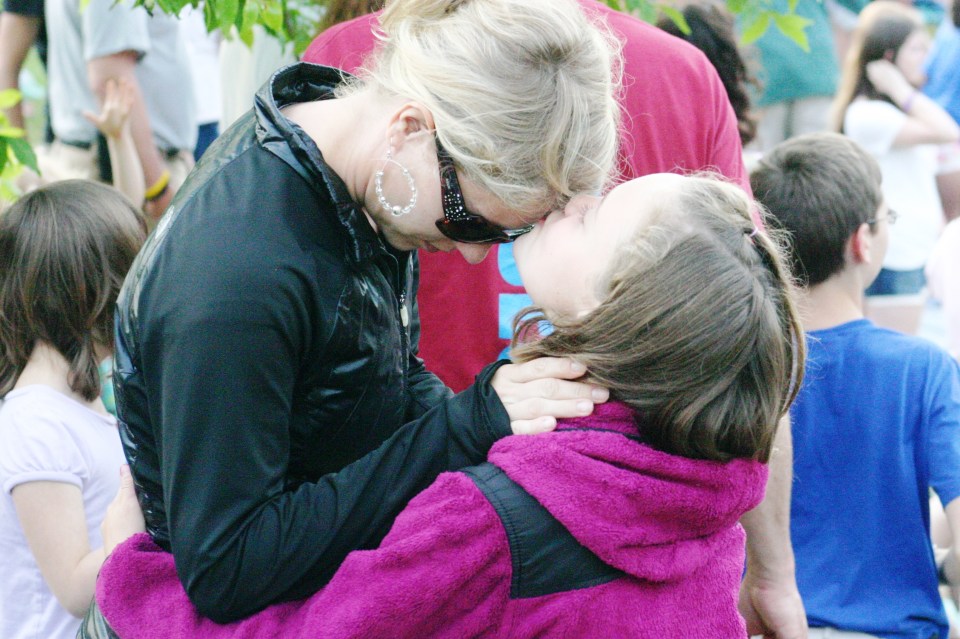
A significant part of being a contributing member of a community dedicated to achieving something great and enduring is being able to see the world through the eyes of others. It’s the ability to relate to where others are at so to know what it’s like to “walk in another’s shoes.” In my last post I wrote about one of the essential personal qualities and professional competencies a person needs to be successful at SpringHill is to be “Community Focused”, in other words, to be a team player.
But to be truly “Community Focused” a person also needs to demonstrate a quality we call “Compassion and Sensitivity”. It’s a personal quality and professional competency necessary for a person to demonstrate if they’re to make a long-term impact at SpringHill. We believe it’s not just enough to be committed to the mission and vision of SpringHill but to be committed to the people who work for the mission, who support the mission, and those for whom the mission serves.
A person who is compassionate and sensitive to others shows genuine concern for other’s welfare, sees and anticipates their needs, and seeks to build relationships with all kinds of people regardless of where they’re at spiritually, physically, intellectually, emotionally, or socio-economically. In other words, it’s being a person whose “people centered” that will find long-term success at SpringHill.
But it’s important to see that being compassionate and sensitive looks different in different people. And it’s also important to avoid the common belief that compassion and sensitivity is a personality type. Instead it’s an attitude accompanied by observable behaviors, in other words, it’s something a person does.
So we expect all our staff to demonstrate the qualities of “Compassion and Sensitivity” regardless of their personality, because it’s a necessary ingredient in being “Community Focused”, thus for making an enduring impact through their work at SpringHill.
This is part 7 of 14 in a series of posts about what it takes to be successful at SpringHill.
Together Accomplishing Something Great and Enduring

The greatest accomplishments the world has ever seen are the result of teamwork. Great institutions built, just wars won against incredible odds, and complex social problems solved because of communities of people who worked together to achieve something good, positive, and lasting. In every case these great accomplishments could not have happened through the work of a single person. True, a single person may have led the team, or been the public face, but behind that leader has always been people committed to seeing the work successfully completed.
Even in my life, in the great accomplishments I’ve participated in, I’ve always been member of a community. Whether it’s teaming up with my wife Denise to raise our children, being a part of a winning sports team, or working for an effective organization like SpringHill, it’s always been the team, the community that has brought success.
It’s this reality and the power of people working together to accomplish something significant and lasting that’s made it absolutely critical that SpringHill staff be great team players. It’s why being “Community Focused” is an essential personal quality and a key professional competency for staff who want to make an enduring impact at SpringHill.
“Community Focused” people not only value being part of a team, they value the team’s success over their own. They acknowledge and thrive on the inter-dependency our work requires including valuing the God-given differences each person brings to the community.
So whatever good and lasting thing SpringHill has ever done, or will ever do, will come through the team of people who’ve committed themselves, not only to SpringHill’s mission, vision and goals, but also to each other, working tirelessly as a team to see SpringHill accomplish the good work God’s given it to do.
This is part 6 of 14 in a series of posts about what it takes to be successful at SpringHill.


