Always a Student – The Essential Need to Learn
 When you learn, you grow and change, and when you grow and change, it’s almost always a result of learning. There’s an undeniable relationship between these concepts. So if a person or an organization wants to grow, whether it’s in a career, a relationship, or in their impact on people and the world, it almost always requires ongoing learning. Because the reality is growth and change will stall or burn out if not fueled by learning.
This is why one of SpringHill’s core values is to be a learning and mission-driven organization. Without learning we would not experience the necessary change required to grow in our influence, outreach and effectiveness in fulfilling our mission and achieving our long-term goals. As we often remind each other “if we’re not learning we’re dying.”
It’s also why one of the qualities and competencies a person needs to have long-term success at SpringHill is what we call “Personal Learning”. It’s that personal and professional curiosity and inquisitiveness which leads to continuous improvement in one’s self and in the organization.
Personal Learning is evident in people who read, listen to others, ask lots of questions, and seeks out other people and organizations to “go to school on”. It’s also evident in people who take mistakes, defeats, and crises and see them as opportunities to learn , grow, and change. Struggles are an ally to people who love to learn.
One of the tell-tale signs a person (and organization) embraces Personal Learning is that they’re humble. You see Personal Learning requires people who accept and acknowledge to others, and to themselves, that they don’t have it “all figured out” and never will.
So, as you can see, Personal Learning is an absolutely essential part of SpringHill, which also means it is an absolutely essential quality of our staff, board and volunteers, especially if, together, we’re to make an enduring impact on our world.
This is part 3 of 14 in a series of posts about what it takes to be successful at SpringHill.
Being a Part of Something Bigger Than Me
 Somewhere early in my career is when I decided I wanted to work for something (organization or cause) that’s bigger than I am. I wanted to be a part of something that’s making a difference in the lives of people, making a difference in the world, and ultimately, making a difference in God’s Kingdom. But what I discovered was that just being a part of something bigger than me isn’t enough, nor, as I’ve also discovered, is it enough for most people.
What most people want to know is “what do I need to do to contribution to our organization’s success – the fulfillment of its mission and vision?” This question is the final question every organization that desires to make an enduring difference in the world needs to answer, not just for its self, but for the people who work, volunteer, and support the organization. As a good friend said to me recently “I want to know what piece of the SpringHill puzzle God wants to me to be”.
Unfortunately most organizations, including many times SpringHill, don’t always provide clear answers to the people who, not only want to be a part of something bigger than then themselves, but also want to make a meaningful contribution. Yet helping to bring job and role clarity becomes essential for the organization’s ultimate success, because it’s people who make visions and BHAGG’s reality.
At SpringHill we help staff, volunteers and others answer “what do I need to do to contribution?” by clarifying the answers to these simple but critical follow-up questions:
- Where do I fit into the organization? Position, job title, team and reporting relationships
- What am I responsible for? Defines the scope of the position
- What do I do to meet my responsibilities? Goals and objectives (aligned with the answers to the other organizational questions)
- What are the personal qualities do I need to fit within the team culture and be successful? Defined leadership competencies
- How will I know I’m being successful? Evaluations and performance appraisals
Helping people understand how they can contribute to an organization’s success may be the last question to answer, but it’s also the most important one.
This is part 6 of 6 in a series of posts about the questions every organization needs to answer to achieve their vision.
The Stupid Bucket and the Smart Bucket
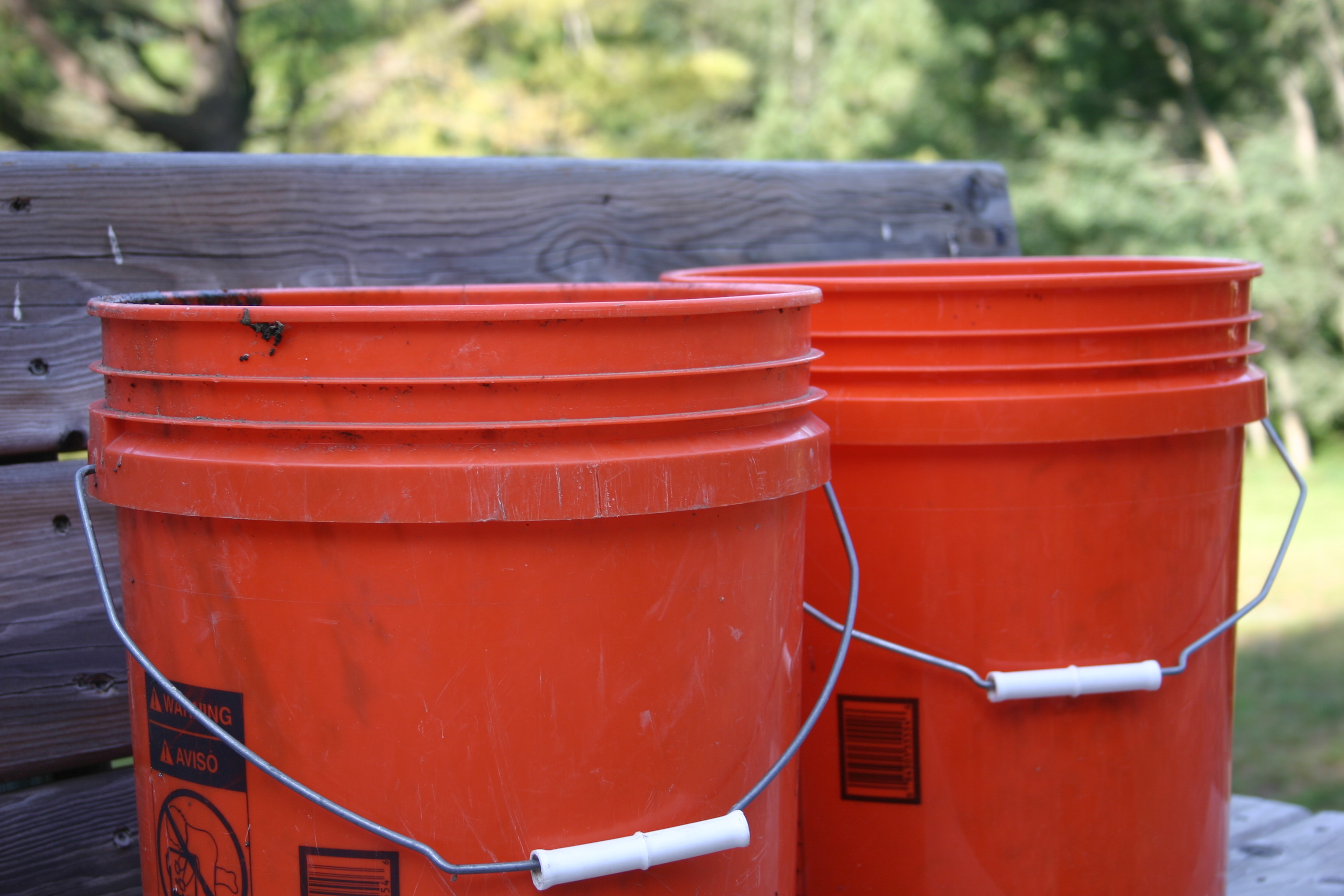
 In one of our last summer staff meetings two of our summer camp directors, Jason Hoffer and Matt Casburn, challenged our staff to finish the summer strong. They did it by using a simple but memorable illustration. They told our staff “everyone carries around two buckets – the ‘smart bucket’ and the ‘stupid bucket’ – and every day we can take something out of one of these two buckets.”
The question they asked was “which bucket will you grab from during the last days of camp, the stupid one or the smart one?” The message to our summer staff was clear – you’ve been taking from the smart bucket all summer long, so don’t start grabbing from the stupid bucket in the last weeks of camp, meaning don’t start using poor judgment and making poor choices when all summer long you’ve used good judgment and made good choices.
And Matt and Jason, being the leaders they are, made this brief dialogue funny and, more importantly, memorable. So memorable in fact that, over the final days of camp, I heard numerous summer staff half-jokingly and half-seriously saying to each other “don’t take from the stupid bucket” or “let’s not do a stupid bucket thing”. Some of our staff even bought two buckets to remind every one of the two options they had before them.
It’s a sign of great leadership when you can give your team a warning or directive that isn’t threatening or demeaning, but instead funny, memorable, and effective because it gains your team’s commitment, not just their compliance. And even better is when the message is continuously repeated by your team creating a climate of self accountability and encouragement in making the right choices.
So what bucket will you take from this week?
T-shirts and Stretch Goals
 I love summer camp and always hate when it’s over. I especially miss watching God transform the lives of campers and staff. But I also miss watching our team perform during these crazy weeks. They’re committed and talented people who create incredible experiences.
One of my favorite moments from this summer was watching our team go after the goal of having 25% of our campers pre-register for 2013 summer camp. You see in the past we’d only open up registration months after summer camp ended. A couple of years ago we decided to test whether parents would sign their kids up for next year’s camp at the end of their camp session. We tried some things and had some success, but nowhere close to what we desired.
So instead of giving up we set a stretch goal of 25% pre-registration without a clear plan on how we’d achieve it. What we had were some t-shirts to give away to campers who signed up for the next year. So our Indiana overnight team created a plan that would generate excitement on the closing day of camp with the goal of moving parents to sign up for next year. The plan included having all professional staff wear one of these t-shirts, promote pre-registration during the closing rally, and have highly visible tables at key locations so parents could easily pre-register and receive a t-shirt before leaving camp.
So what was the result of our Indiana team’s Week 1 efforts? We pre-registered more kids than the total number of 2011 Indiana pre-registrations.
Word quickly spread throughout SpringHill and over the next few weeks our other team’s implemented similar plans with similar results. Today, at our two overnight camps, we’ve pre-registered close to 35% of our campers, easily exceeding our stretch goal of 25%.
And that’s why it’s one of my favorite summer camp moments. Because I love when teams set stretch goals, create simple yet effective plans, work the plans and then share their successes so that others can succeed as well.
It’s also one of the reasons why I’m already looking forward to next year’s summer camp.
April Gann – Loving Kids, Loving Staff, Loving Christ!

April with some of her campers and staff This past Friday was April Gann’s last day as a SpringHill staff member (I know she’ll always be an ambassador, volunteer and advocate for SpringHill for as long as she and SpringHill are both around). It was a bittersweet day as staff and campers took the opportunity to celebrate her 12 years of ministry (in two different stints) with SpringHill.
One of things I have always appreciated about April is her love for children, and in particular children from urban areas, and her love for our summer staff. These two loves, combined with her love of Christ, have led April to be a part of two significant startup teams during her tenure at SpringHill. First, April was on the start-up team, then the second director, for Storybrook, our 1 thru 3rd grade camp in Michigan. April helped cement the culture, program and focus of Storybrook that still exists today.
Secondly, April has been instrumental in the startup and growth of our Day Camps ministry. Once again her love of kids and staff has helped this program grow to become a significant ministry of SpringHill. It’s become significant not just because of its reach to children but also because it’s become a desirable summer ministry opportunity for 100’s college students.
Now April’s moving to inner city Detroit where she and her soon to be husband Josh will be taking up residence. Their goal is to continue, as April stated in her blog, “loving and serving the kids in our neighborhood” which, of course, is no surprise knowing April and the things she loves.
Getting to “Running Smoothly”

Legend has it that the late, great coach of the Green Bay Packers, Vince Lombardi, was nearly useless during games, at least from the player’s perspective. If this was actually true then the question is how can one of the greatest football coaches of all time, the man for whom the Super Bowl trophy’s named after, be of no use during the most important events in a team’s season – the football games?
The answer to that question also answers the question why the SpringHill summer camp teams have been able to describe the first two weeks of camp as “being remarkably smooth”. As I promised in my last post, below are the steps we expended an enormous amount of energy on to assure “running smoothly” this summer became a reality.
Warning – there’s no magic formula here, just common sense stuff written about and practiced by effective organizations, including the Green Bay Packers of the 1960’s, since the beginning of time:
First, we find the right people. At SpringHill we define the “right people” as being “mission driven and mission effective”. “Mission driven” describes people who committed to our mission, align with our values and fit our culture. “Mission effective” people have the skills, abilities and experiences to advance our mission (not just believe in it) and achieve our goals.
Second, we take these “right people” and make sure they clearly understand their jobs in terms of roles, responsibilities and outcomes.
Third, we train and equip “the right people” mentally, physically and spiritually so they will achieve their job outcomes and help SpringHill fulfill its mission.
Finally, we coach, communicate, encourage, inspire, and provide positive accolades and helpful critique about how the “right people” are doing on the job and how SpringHill’s doing overall.
When we take these four steps the odds are very good that, like this summer, camp will “run remarkably smoothly”.
“It’s Been Remarkably Smooth”

Our Tri-State Day Camp Team – Steven, Tim, Naomi, and Julie – making it run smooth. After two weeks of summer camp, and visiting 4 of our 9 camp teams/locations, there’s one word that I’ve heard over and over when I’ve asked people (staff, parents, and board members) how the first two weeks of camp have gone, and that word is “smooth”. I’ve heard things like “it’s going remarkably smooth, maybe the best week one ever” or “the smoothest first opening day we’ve ever had”.
Now granted, because of my position within SpringHill, you might be thinking that our team could be tempted to say camp’s going great because they know that’s what I want to hear. But a leader must always avoid being tempted to rely only on what’s being said without also experiencing it firsthand. That’s why I spend so much of my summer visiting our SpringHill teams and seeing the SpringHill Experience in action.
So what’s my assessment of our first two weeks of camp? Well our team’s spot on when they’ve said things have gone remarkably smooth. So how do I make such an assessment? When I’m “out and about” I look for a few key indicators which provide clues into how things are going.
First, I look at the demeanor of our staff, beginning with our leaders. Are they calm or do they seem frazzled? Are they focused on people (each other, parents, partners and especially campers) or scrambling to get tasks down?
Second, I observe the cleanliness and orderliness of our camps, activity areas, offices, etc. It’s hard for things to go smoothly when behind the scenes it’s chaotic and the small things aren’t taken care of.
Third, I watch campers and their parents. Are they genuinely excited, warmly embraced, actively engaged, and completely safe and confident in the camp experience? Or do they look lost, confused or plain unhappy?
Finally, I combine the testimony of our staff and leaders, my own observations, and our weekly key indicators to arrive at my assessment of “how camp is going.”
In my next post I’ll share some of the essential elements that have led to our “smooth start to our summer.”
“Why Organizational Health Trumps Everything Else”

In Patrick Lencioni’s new book The Advantage he makes his case for why organizational health is the most important characteristic in any successful business or not for profit organization.
“At its core, organizational health is about integrity, but not in the ethical or moral way that integrity is defined so often today. An organization has integrity – is healthy – when it is whole, consistent, and complete, that is, when its management, operations, strategy and culture fit together and make sense.
…any organization that really wants to maximize its success must come to embody two basic qualities: it must be smart, and it must be healthy.
Smart organizations are good at those classic fundamentals of business – subjects like strategy, marketing, finance, and technology – which I consider to be decision sciences.
But being smart is only half the equation. Yet somehow it occupies almost all the time, energy, and attention of most executives. The other half of the equation, the one that is largely neglected, is about being healthy.
A good way to recognize health is to look for the signs that indicate an organization has it. These include minimal politics and confusion, high degrees of morale and productivity, and very low turnover among good employees.
The vast majority of organizations today have more than enough intelligence, expertise, and knowledge to be successful. What they lack is organizational health.
This point is worth restating.
After two decades of working with CEO’s and their teams of senior executives, I’ve become absolutely convinced that the seminal difference between successful companies and mediocre or unsuccessful ones has little, if anything, to do with what they know or how smart they are; it has everything to do with the how healthy they are.”
Creative Solutions and Heroic Actions

The Heros – Teri, Joe, Dan, Rose, Dwayne, Chuck, Eric and Josh (missing – Ryan, Allison, Casto, Matt, Jarred, and Jake) What do you do when you’re training 100’s of summer staff and, at the same time, hosting multiple retreat groups, all of which require a lot of meeting space, and you happen to be a camp for kids and not a conference center?
You get creative, and a little sweaty, and sore, and you convert your game room into a meeting room that accommodates over 200 people. And by convert I mean moving pool and ping ball tables, booth seating, chairs, and tables out of the game room and into other locations, and move in and set into place staging, AV equipment, and appropriate meeting room seating.

The game room before the conversion. Photo by Rose Peever 
The game room after the conversion. And that’s exactly what our Michigan overnight camp team did last week. Why? Because we consider it a privilege to ally with other ministries by providing them an outstanding retreat experiences, so we’ll do whatever we can to accommodate their needs, even if it means thinking and do things we’ve never thought of, or tried before.
As someone once said “necessity is the mother of all inventions”, and it’s when you’re committed to serving others, including fulfilling your commitments to them, that opportunity often becomes necessity. So, for our team, it was out both necessity and their desire to create outstanding experiences for our guests, which led to their novel solution, and more importantly their willingness to see that solution become a reality.
So you see, such things as problem solving tools and innovation processes are not enough. Real creativity and problem solving begins and ends with willing hearts and open minds, followed by a commitment to action, even at a personal cost. And how do I know this is true? Because of what our Michigan Site and Retreats team did last week to assure our guests had an outstanding SpringHill Experience.
What Inspires “New and Improved”!

People often say that they can’t wait to return to SpringHill to see what’s new and improved. We’ve developed a reputation for not sitting comfortably on the current state of our properties, facilities, activities and programs. So people come to our camps with anticipation.
I believe this is true because SpringHill staff live with two types of dissatisfactions. The first is we continue to have that artist’s “dissatisfaction with the present” that we inherited from our Founding Director, Enoch Olson. It’s that God-given desire to create, with the belief that there’s always room for something new that will add more beauty to the present.
The other dissatisfaction, which I’ll admit may be more closely related to the first one than I’m acknowledging, is the dissatisfaction that comes from always wanting things better, more exciting, bigger and faster. It’s driven by our desire to “wow” our campers and guests the second and third time they’re at camp, not just the first.

It’s also why I looked forward, with anticipation, to visiting our camp in Indiana last week. It’s been a few months since I last visited, and I knew there’s been a lot of good work being done by our team, all inspired by these two dissatisfactions. And I wasn’t disappointed.
I saw the improved dining hall and large group meeting area with its better acoustics and stage. Also one of our campers’ favorite activities, the “Party Barge”, went through a major renovation. Then our team’s added a giant’s swing that will propel campers high into the sky, and finally, though maybe not as exciting but just as important, we’ve added electricity to all our cabins.
So I left camp confident that our campers will not be disappointed, just as I wasn’t, when they return this summer, and see what’s new and improved.