Being a People Centered Person
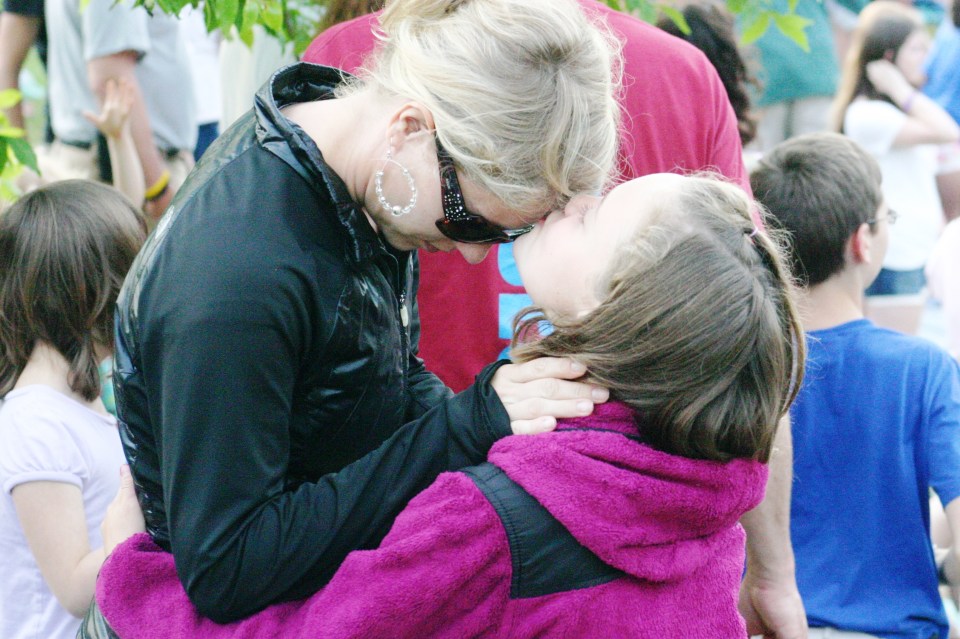
A significant part of being a contributing member of a community dedicated to achieving something great and enduring is being able to see the world through the eyes of others. It’s the ability to relate to where others are at so to know what it’s like to “walk in another’s shoes.” In my last post I wrote about one of the essential personal qualities and professional competencies a person needs to be successful at SpringHill is to be “Community Focused”, in other words, to be a team player.
But to be truly “Community Focused” a person also needs to demonstrate a quality we call “Compassion and Sensitivity”. It’s a personal quality and professional competency necessary for a person to demonstrate if they’re to make a long-term impact at SpringHill. We believe it’s not just enough to be committed to the mission and vision of SpringHill but to be committed to the people who work for the mission, who support the mission, and those for whom the mission serves.
A person who is compassionate and sensitive to others shows genuine concern for other’s welfare, sees and anticipates their needs, and seeks to build relationships with all kinds of people regardless of where they’re at spiritually, physically, intellectually, emotionally, or socio-economically. In other words, it’s being a person whose “people centered” that will find long-term success at SpringHill.
But it’s important to see that being compassionate and sensitive looks different in different people. And it’s also important to avoid the common belief that compassion and sensitivity is a personality type. Instead it’s an attitude accompanied by observable behaviors, in other words, it’s something a person does.
So we expect all our staff to demonstrate the qualities of “Compassion and Sensitivity” regardless of their personality, because it’s a necessary ingredient in being “Community Focused”, thus for making an enduring impact through their work at SpringHill.
This is part 7 of 14 in a series of posts about what it takes to be successful at SpringHill.
Together Accomplishing Something Great and Enduring

The greatest accomplishments the world has ever seen are the result of teamwork. Great institutions built, just wars won against incredible odds, and complex social problems solved because of communities of people who worked together to achieve something good, positive, and lasting. In every case these great accomplishments could not have happened through the work of a single person. True, a single person may have led the team, or been the public face, but behind that leader has always been people committed to seeing the work successfully completed.
Even in my life, in the great accomplishments I’ve participated in, I’ve always been member of a community. Whether it’s teaming up with my wife Denise to raise our children, being a part of a winning sports team, or working for an effective organization like SpringHill, it’s always been the team, the community that has brought success.
It’s this reality and the power of people working together to accomplish something significant and lasting that’s made it absolutely critical that SpringHill staff be great team players. It’s why being “Community Focused” is an essential personal quality and a key professional competency for staff who want to make an enduring impact at SpringHill.
“Community Focused” people not only value being part of a team, they value the team’s success over their own. They acknowledge and thrive on the inter-dependency our work requires including valuing the God-given differences each person brings to the community.
So whatever good and lasting thing SpringHill has ever done, or will ever do, will come through the team of people who’ve committed themselves, not only to SpringHill’s mission, vision and goals, but also to each other, working tirelessly as a team to see SpringHill accomplish the good work God’s given it to do.
This is part 6 of 14 in a series of posts about what it takes to be successful at SpringHill.
A Centered Life
 Everyone centers their life on something. Whether it’s on a pursuit, purpose or goal, our lives become energized by our “center”. Some people center their life simply on surviving day by day, while others, on the opposite extreme, center their lives on consuming material goods, experiencing pleasure or living for excitement and highs. Yet others center their lives on an idea or a cause. But regardless of what it is, everyone’s life’s centered on something, something that drives them and gets them out of bed every day.
At SpringHill we expect our staff to be centered on a person – the person of Jesus Christ. Of all the personal qualities and professional competencies a person needs to have to make an ongoing, positive impact at SpringHill, this is the most important one, because it’s who we are and what we do. We call this quality “God Immersed”, which simply means that a person is Christ centered and thus living their lives in a Christ like way and from a Biblical perspective.
When you consider our mission and our core values this only makes sense. If our mission is to create life changing experiences where young people can know and grow in their relationship with Jesus Christ than our staff has to being growing in their own relationships with Christ. And if one of our organization’s highest values is “Jesus Christ and His message of grace”, than it needs to be a living value of our staff as well.
So what do we expect to see in a person’s life to know they’re “God Immersed”? It’s simply participating in such spiritual practices as prayer, Bible reading and study, as well as attendance and involvement in a local church. All of which leads to a Christ centered life that reflects Biblical and Kingdom values, and, in the end, multiplies the fruitfulness of our work.
This is part 5 of 14 in a series of posts about what it takes to be successful at SpringHill.
Wisdom Applied
 The test of our wisdom is found in the decisions we make. It’s displayed in the quality, timeliness, and the process in which we go through to make decisions. So it’s all three of these aspects of decisions – quality, timeliness, and process – that reflect the wisdom we have, or don’t have.
Wisdom requires knowledge, experience, judgment, and analytical ability, combined with a strong sense of right and wrong. And the measure of all these things, the proof that we have wisdom comes through in the decisions we make. Decisions are the tangible, measurable expression of our wisdom. Its wisdom applied.
It’s also why one of the personal qualities and professional competencies someone needs to possess if they’re to have long-term success at SpringHill is quality and timely Decision Making.
At SpringHill this competency is absolutely critical because of the freedom we provide our staff to do their jobs and the sense of stewardship we expect them to practice. It’s because we believe that the best people to make decisions are the ones closet to the “action”, not those sitting far behind the “frontlines”. We believe this to be true because those at the “front line” have the best perspective and expertise.
Thus when an organization keeps decision-making closest to the “front lines” it requires staff who can display wisdom through their Decision Making. And, if done right, this kind of Decision Making ends up being the best because it’s almost always faster and higher quality.
And the added benefit of entrusting decision-making to staff on the “front lines” is that they continue to grow in their wisdom and in their ability to make decisions, helping the entire organization continually become better and more effective in fulfilling its mission (it’s all part of Personal Learning I covered in the last post).
This is part 4 of 14 in a series of posts about what it takes to be successful at SpringHill.
Always a Student – The Essential Need to Learn
 When you learn, you grow and change, and when you grow and change, it’s almost always a result of learning. There’s an undeniable relationship between these concepts. So if a person or an organization wants to grow, whether it’s in a career, a relationship, or in their impact on people and the world, it almost always requires ongoing learning. Because the reality is growth and change will stall or burn out if not fueled by learning.
This is why one of SpringHill’s core values is to be a learning and mission-driven organization. Without learning we would not experience the necessary change required to grow in our influence, outreach and effectiveness in fulfilling our mission and achieving our long-term goals. As we often remind each other “if we’re not learning we’re dying.”
It’s also why one of the qualities and competencies a person needs to have long-term success at SpringHill is what we call “Personal Learning”. It’s that personal and professional curiosity and inquisitiveness which leads to continuous improvement in one’s self and in the organization.
Personal Learning is evident in people who read, listen to others, ask lots of questions, and seeks out other people and organizations to “go to school on”. It’s also evident in people who take mistakes, defeats, and crises and see them as opportunities to learn , grow, and change. Struggles are an ally to people who love to learn.
One of the tell-tale signs a person (and organization) embraces Personal Learning is that they’re humble. You see Personal Learning requires people who accept and acknowledge to others, and to themselves, that they don’t have it “all figured out” and never will.
So, as you can see, Personal Learning is an absolutely essential part of SpringHill, which also means it is an absolutely essential quality of our staff, board and volunteers, especially if, together, we’re to make an enduring impact on our world.
This is part 3 of 14 in a series of posts about what it takes to be successful at SpringHill.
Life is a Stool – Living in Balance
 My dad has always said that life sits on a 4 legged stool with one leg being work/career, another family, a third friends and service, a fourth being health and recreation, and the most important part of the stool, the seat, representing our faith. Dad says that for life to be in balance, for it to be the way it’s supposed to be we need all four legs and the seat. If we neglect or remove any part we’ve made balance nearly impossible and the entire stool, and our lives, become at risk of falling apart.
I’ve always appreciated my dad’s way of looking at life, partly because it makes sense and partly because I’ve seen he and my mom live their lives in this way with the result being they’ve been blessed as well as having blessed those around them.
It’s this life perspective and practice that we’ve discovered to be an essential quality of people who’ve made a long-term and an enduring impact on SpringHill’s mission. It’s what we simply call “Life/Work Balance”.
Without this balance, life quickly crumbles and one’s ability to make an enduring impact quickly diminishes. When balance is gone health, influence and impact quickly leave as well, only to be backed filled with burn out, broken relationships, and poor judgment. Because like a stool, every part is essential and needs to be in working order or it will negatively impact the entire stool.
So Life/Work Balance is absolutely essential for people to be at their best. And we want and need people to be at their best, whether it’s at home with their families, at church teaching Sunday school, or working at SpringHill.
This is part 2 of 14 in a series of posts about what it takes to be successful at SpringHill.
What it Takes to Be Successful at SpringHill
 Every organization and team “culture” is different. The culture is the organization’s unique personality, its set of unwritten (and often unspoken) rules and expectations about how work gets done, and how people should treat and how relate to one another. And obviously, for a person to be successful within a specific organization, requires a unique set of personal qualities and competencies that fit that culture.
So because there’s no one right formula of personal qualities and competencies that work in every organization, with the help from an organizational psychologist, we’ve identified those qualities and competencies necessary for a person to be successful, over the long run, at SpringHill. The process we used included gathering feedback from a large number of our staff about the qualities they see in successful SpringHill staff. And to this feedback we added the best that leadership research says on the subject.
When we finished we ended up with 13 different, clearly defined “Leadership Competencies” that members of our team need to possess if they’re going to have a long-term impact within SpringHill. These 13 competencies have become the core to all of our “people” processes such as hiring and selection, performance management and appraisals, training and development, and finally succession planning.
Below are these 13 SpringHill “leadership competencies” divided into four categories:
Mastery of Self
Life/Work balance Personal Learning
Decision Making God Immersed
Mastery of Relationships
Community Focus Compassion and Sensitivity
Spiritual Leadership Customer Focus
Mastery of Performance
Leading People Resourcefulness
Professional Will Continuous Improvement
Mastery of Vision
Culture Bearer
Over the next couple of weeks I’ll share with you more details of each of the competencies and their importance within the SpringHill culture.
This is part 1 of 14 in a series of posts about what it takes to be successful at SpringHill.
Being a Part of Something Bigger Than Me
 Somewhere early in my career is when I decided I wanted to work for something (organization or cause) that’s bigger than I am. I wanted to be a part of something that’s making a difference in the lives of people, making a difference in the world, and ultimately, making a difference in God’s Kingdom. But what I discovered was that just being a part of something bigger than me isn’t enough, nor, as I’ve also discovered, is it enough for most people.
What most people want to know is “what do I need to do to contribution to our organization’s success – the fulfillment of its mission and vision?” This question is the final question every organization that desires to make an enduring difference in the world needs to answer, not just for its self, but for the people who work, volunteer, and support the organization. As a good friend said to me recently “I want to know what piece of the SpringHill puzzle God wants to me to be”.
Unfortunately most organizations, including many times SpringHill, don’t always provide clear answers to the people who, not only want to be a part of something bigger than then themselves, but also want to make a meaningful contribution. Yet helping to bring job and role clarity becomes essential for the organization’s ultimate success, because it’s people who make visions and BHAGG’s reality.
At SpringHill we help staff, volunteers and others answer “what do I need to do to contribution?” by clarifying the answers to these simple but critical follow-up questions:
- Where do I fit into the organization? Position, job title, team and reporting relationships
- What am I responsible for? Defines the scope of the position
- What do I do to meet my responsibilities? Goals and objectives (aligned with the answers to the other organizational questions)
- What are the personal qualities do I need to fit within the team culture and be successful? Defined leadership competencies
- How will I know I’m being successful? Evaluations and performance appraisals
Helping people understand how they can contribute to an organization’s success may be the last question to answer, but it’s also the most important one.
This is part 6 of 6 in a series of posts about the questions every organization needs to answer to achieve their vision.
“Handsome is as Handsome Does”
 “Handsome is as handsome does.” Samwise Gamgee
Having lofty goals and big visions is important. But they’re nothing more than words unless an organization takes intentional and thoughtful steps to make them reality. And it’s in taking tangible, day-to-day action that separates ineffective from effective organizations.
So there are two additional questions an organization needs to answer if it’s going to make its dreams come true. The first question is “what do we have to do to be successful?” and the second question is “what’s important right now?”
The first question drives an organization to determine the key long-term actions necessary to reach their targets and move towards their BHAGG and Vision. At SpringHill we call these long-term actions (actions that takes more than a year to implement) our “Big Moves”. They’re strategic in nature and typically center on major initiatives and shifts within our organization or the ministry we do that will help propel us forward.
The second question, “what’s important right now?” drives those Big Moves into our daily work. We call these our Annual Moves (to be completed within a year) and our Seasonal Moves (to be completed within the next four months). Annual and Seasonal Moves are tactical in nature. They’re the work that needs to be done “right now” and should align with our Big Moves.
We spell out our Big, Annual and Seasonal Moves with as much definition as possible, including having defined beginnings and endings. Then we review their progress every week so that they become things we do and accomplish not just grandiose words or ideas.
Now I’ll admit implementing tactics isn’t as sexy as developing strategy and vision. But the truth is it’s in this day-to-day work that Visions and BHAGG’s become a reality. It’s what “handsome does.”
This is part 5 of 6 in a series of posts about the questions every organization needs to answer to achieve their vision.
Do You Know What You’re Shooting For?
 “What get’s measured is what gets done.”
I live in northern Michigan where opening day of deer season is a holiday. Schools close and very little business transacts. Part of the deer hunting tradition is the annual “sighting in” of a hunter’s gun that usually happens the weekend before opening day. “Sighting in” is where hunters shoot at a target for the purpose of aligning their gun’s sights/scope. The marks shot on the target indicate how aligned the gun’s sights are and direct the hunter’s sight adjustments. Obviously “sighting in” is important to achieving the goal of shooting a trophy deer.
It’s this idea of targets, goals, and indicators that help SpringHill answer the question “How will we know we’re being successful?” Targets are what we shoot for in the long run (more than a year away) and goals are the immediate things (year or less) we’re trying to accomplish. Indicators, on the other hand, are those measurements that help us assess how we’re doing accomplishing our goals and targets. Targets and goals should align with each other and both should align with the future aspirations of an organization (its vision and BHAG).
Typically an organization has a number of targets, goals and indicators that centered on such key areas as customers, finances/stewardship, market size, people, and operations. Every organization is different so the targets, goals and indicators should be different. The key is finding the right ones that lead the organization forward and tell its people how they’re doing. Then the team’s responsibility is to faithfully and regularly measure, watch, and effectively respond to those numbers.
Targets, goals and indicators are essential for an organization’s ability to answer the question “are we being successful and heading in the right direction?” Without them, and the proper tracking of them, an organization is left to guessing at how they’re doing, which is never good when hunting for a trophy.
This is part 4 of a series of posts about the questions every organization needs to answer to achieve their vision.


